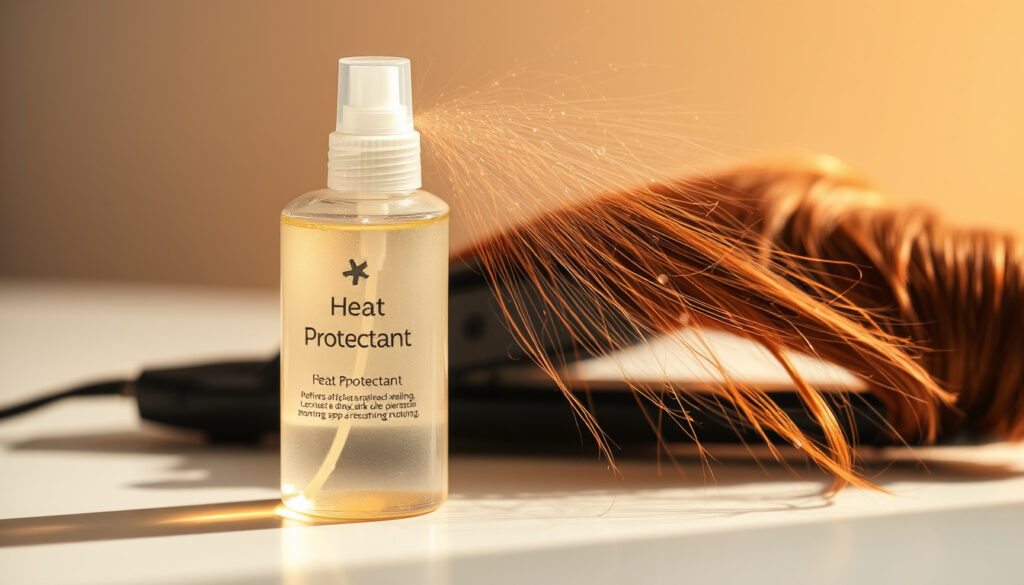
Does Heat Protectant Spray Work? How to Use It Right
Anyone who owns a flat iron knows the ritual: you spray something on your hair, hope it does what the label promises, and then press the hot plates against your strands. But do those sprays actually work, or are they just scented water in a bottle? Here’s what the science—and the people who formulate this stuff—really say about heat protectant sprays, plus exactly how to use them so you don’t fry your hair.
Heat protectant forms a protective barrier: slows heat transfer and seals cuticle ·
Recommended spray distance: 6–8 inches from hair ·
Apply before any heat styling: blow-dry, straighten, or curl
Quick snapshot
- Heat protectants form a thin film that slows heat transfer to hair (Evo Hair, professional haircare brand)
- Proper application is critical – even coating from roots to ends (L’Oréal Paris, global haircare manufacturer)
- Silicone-based formulas are widely used and studied (Living Proof, science-driven haircare brand)
- Whether natural oil–based protectants work as well as silicones – limited comparative studies
- Long-term effects of daily silicone buildup on hair health – not fully established
- Heat protectant market continues to grow, with new polymer and plant-based formulas entering the category
- Expect more dual-purpose sprays that combine heat protection with colour care or heat-activated repair
Four key facts at a glance, drawn from brand education pages and cosmetic chemistry guidance.
| Fact | Detail |
|---|---|
| Primary mechanism | Thermal barrier absorption and redistribution |
| Common active ingredient | Silicones (e.g., dimethicone, cyclomethicone) |
| Maximum effective temperature | Approximately 450°F (232°C) |
| Application distance | 6–8 inches from hair |
Does Heat Protectant Spray Actually Work?
What the science says about heat protectant efficacy
Heat protectants are designed to form a thin film that slows heat transfer to hair and can help seal the cuticle to support moisture retention and shine, according to Evo Hair, a professional haircare brand. This film absorbs and redistributes heat so that no single area reaches the scorching temperature that causes protein denaturation. When applied correctly, the barrier reduces surface damage and moisture loss. The key word is “correctly”—coverage needs to be even, and the product needs to match your styling temperature.
“Heat protectants are designed to form a thin film that slows heat transfer to hair and can help seal the cuticle to support moisture retention and shine.”
How heat protectants reduce hair protein loss
When the hair cuticle is exposed to direct heat above 300°F, water inside the cortex vaporises, causing bubbles and cracks. A properly applied protectant keeps the outer temperature high enough to style but buffers the internal spike. L’Oréal Paris, a major haircare manufacturer notes that this reduces protein loss and helps maintain elasticity. Without protection, repeated styling leads to cumulative damage—split ends, brittleness, and loss of natural shine.
Is Heat Protection Spray Good for Your Hair?
Benefits beyond heat protection
Beyond defending against thermal damage, many heat protectants contain conditioning agents that improve feel and shine. Living Proof, a science-driven haircare brand explains that silicones (like dimethicone) coat the hair, reducing friction from styling tools and adding a smooth finish. Some formulas also include humectants or hydrolysed proteins that help retain moisture during blow-drying.
The result: hair that looks healthier immediately after styling.
Potential downsides or buildup
The flip side is product buildup. Silicones can accumulate on the hair shaft if not washed out properly with a clarifying shampoo every few weeks. Evo Hair advises that while lightweight sprays generally leave less residue than creams, over-application on fine or low-porosity hair can lead to limpness and dullness. The solution: adjust the number of spritzes to your hair density and use a sulfate-free shampoo to manage buildup.
Upsides
- Reduces thermal damage and protein loss (L’Oréal Paris)
- Adds shine and reduces friction during styling (Living Proof)
- Available for all hair types and budget ranges
Downsides
- Can cause product buildup if overused or not washed out thoroughly
- Silicones may weigh down fine hair
- Effectiveness varies widely between spray, cream, and serum formats
The implication: heat protectant is beneficial for most users, but formulation choice and washing routine matter for fine or low-porosity hair.
Do I Put Heat Protectant on Wet or Dry Hair?
Applying heat protectant on wet hair before blow-drying
Evo Hair recommends starting with freshly washed, towel-dried hair because it is more absorbent and better able to take on heat protectant evenly. L’Oréal Paris echoes this: apply to damp hair before blow-drying, but let the hair dry fully before using a flat iron or curling wand. Wet hair application ensures the product spreads across the entire shaft and locks in moisture before hot air hits.
Applying heat protectant on dry hair before straightening or curling
For direct heat tools like straighteners and curling irons, dry hair is the canvas. Ulta Beauty, a major US beauty retailer also recommends a formula intended for dry application when styling dry hair. Living Proof adds that whether you apply on damp or dry hair depends on the product formulation—some sprays are made only for one state. Always read the label: if it says “for dry use,” don’t spray it on wet hair.
Heat protectant for damp vs. dry styling
The choice comes down to your routine. If you blow-dry first and then straighten, use a product designed for dry hair before the second pass. Evo Hair notes that heat protectant can also be used on dry hair before restyling if product build-up is minimal. Layering heat protectant across both wet and dry states is fine, provided you don’t oversaturate—3 to 6 spritzes per section is enough.
Wet-apply formulas spread more evenly but need time to dry before direct heat. Dry-apply sprays offer convenience but require precise distance and sectioning to avoid patchy coverage.
What Is a Good Heat Protector Spray for Hair?
Key factors: heat protection level, hair type, ingredients
The most effective heat protectants typically contain silicones (dimethicone, cyclomethicone) or newer polymers that form a flexible film. Ulta Beauty suggests looking for a product that matches your typical styling temperature—most sprays protect up to 450°F. For fine hair, a lightweight mist prevents weighing down strands; for thick or curly hair, a cream or serum may offer better distribution and added moisture. L’Oréal Paris recommends choosing according to your hair texture and styling habits.
Sprays vs. creams vs. serums
Sprays provide even coverage and are ideal for quick application on medium-to-long hair. Creams work well on thick or coarse hair that needs extra detangling and moisture. Serums, usually silicone-heavy, deliver high shine and heat protection but can be heavy on fine hair. Top-rated brands according to Ulta Beauty include ghd, Tresemmé, and Boots own brand. The “best” one depends on your hair type, the tool you use, and whether you prefer heat protection alone or combined with thermal activation.
A product that claims to protect beyond 450°F may overpromise. No spray can fully prevent damage at extreme temperatures—the barrier becomes less effective above that threshold, regardless of the ingredient list.
How to Correctly Use Heat Protectant
Step-by-step process for wet hair blow-drying
- Start with freshly washed, towel-dried hair (Evo Hair)
- Section hair into manageable parts (e.g., four sections)
- Hold the bottle 6–8 inches from hair (L’Oréal Paris)
- Spray 3–6 spritzes per section, focusing on mid-lengths to ends (Evo Hair)
- Comb through with a wide-tooth comb for even distribution
- Let the product sit for 1–2 minutes before blow-drying
Step-by-step process for dry hair straightening or curling
- Ensure hair is completely dry and free of heavy product buildup
- Hold canister 6–10 inches away and spray in a sweeping motion (Living Proof)
- Work in sections from the bottom layers upward, paying extra attention to ends and hairline (Evo Hair)
- Comb through to ensure no missed patches
- Allow a few seconds for the film to set before applying heat
Amount and application technique
The golden rule: you don’t need to drench your hair. Living Proof recommends holding the canister 6 to 10 inches away and using a sweeping motion. Oversaturating leads to stiffness and slower styling, while under-applying leaves gaps in protection. Use the “section and spray” method—it takes an extra 30 seconds but ensures every strand is coated.
What Is the Most Effective Heat Protectant?
Ingredients that indicate high performance
Dimethicone and other silicones remain the gold standard because they spread easily and form a continuous film. Ulta Beauty notes that products with added proteins (like hydrolysed keratin) or natural oils (argan, jojoba) offer supplementary benefits but the primary heat defence still comes from the film-former. For maximum performance, choose a product with a film-forming ingredient listed in the top five of the INCI.
Product comparison: sprays, creams, mists
The most effective format for you is the one you use consistently. Sprays win on even coverage for medium-to-long hair. Creams are best for thick, curly hair that needs detangling. Mists are the lightest option for fine or short hair. L’Oréal Paris advises checking the label for the maximum temperature rating—a spray rated for 450°F will outperform one rated for 300°F if you regularly use high heat. The trade-off: higher temperature tolerance often means a higher silicone content, which can build up faster.
The pattern: the most effective heat protectant matches your hair type and styling temperature, with silicones providing the strongest thermal defence.
What the Evidence Says
Confirmed facts
- Heat protectant sprays reduce thermal damage to hair when applied correctly (Evo Hair)
- Proper application (sectioning, distance, even coating) is critical for effectiveness (L’Oréal Paris)
- Silicone-based formulas are widely studied and effective at forming a thermal barrier (Living Proof)
What’s still unclear
- Whether natural oil-based protectants match silicones in heat protection – comparative data is sparse
- Long-term effects of daily silicone buildup on hair and scalp health – more research needed
- Optimal reapplication schedule when layering heat tools (e.g., blow-dry then flat iron) – varies by product
“Whether a heat protectant is used on damp or dry hair depends on the product formulation. Some sprays are made only for one hair state.”
Living Proof
“Sectioning and combing through can help ensure even coverage and reduce patchiness when applying heat protectant.”
L’Oréal Paris
For anyone who heat-styles their hair more than once per week, the case for using a heat protectant spray is clear: it measurably reduces protein loss and surface damage when applied with the right technique. The choice between wet and dry application, spray versus cream, and high-silicone versus natural depends on your hair type and styling habits. The one thing that isn’t negotiable is coverage—an uneven spray leaves weak spots where damage starts. For the daily flat-iron user in Brisbane or the weekend blow-dryer in London, the decision is simple: use a protectant every time, apply it to sectioned hair from 6–8 inches, and brush through. That routine costs thirty seconds and buys months of healthier hair.
For a curated list of the best options on the market, check out our guide to the top heat protection sprays for 2026.
Frequently asked questions
Can I use heat protectant on bleached hair?
Yes, bleached hair is more porous and vulnerable to heat damage, so a heat protectant is especially important. Look for a formula with added proteins to help strengthen the hair structure.
Does heat protectant spray help with frizz?
Many heat protectants contain silicones or oils that smooth the cuticle, which can reduce frizz. However, the primary purpose is heat protection, not anti-frizz treatment.
Should I use heat protectant before blow-drying?
Yes, blow-drying still applies heat to the hair. Apply heat protectant to damp hair before blow-drying, as recommended by Evo Hair and L’Oréal Paris.
How much heat protectant spray should I use?
Generally 3 to 6 spritzes per section, depending on hair length and thickness. Avoid oversaturating—the goal is even coverage, not wet hair.
Is heat protectant safe for color-treated hair?
Yes, and it may even help preserve colour by reducing thermal damage that can cause fading. Choose a sulfate-free heat protectant to minimise colour stripping.
More related posts
 Jeffrey Dean Morgan: Age, Height, Wife, Children, and Career
 Nicolas Cage Downfall: Debt, Net Worth, Comeback 2025
 Gervonta Davis: Record, Next Fight & Controversy
 Freida McFadden: Identity Reveal and Book Guide
 Myer Gift Card Balance – How to Check Online
 Jared Padalecki: Bio, Health, Arrest & Net Worth
 Australia Headlight Rule November 1 – Hoax Debunked by Authorities
 Man City vs Liverpool: Results, History & How to Watch
