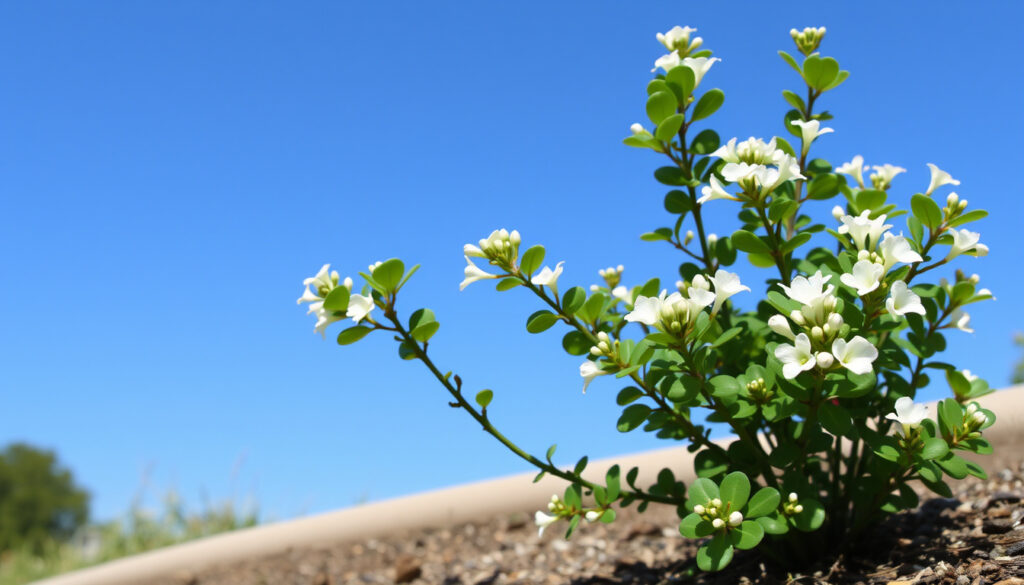
Correa Alba: White Correa Care for Sun, Height & Growing
If you have ever wandered along a coastal heath in southeastern Australia, you have likely brushed past a low, grey-green shrub without a second glance. That unassuming plant is Correa alba, the white correa, and it turns out to be one of the most forgiving native shrubs you can add to a garden, so this guide covers exactly what it needs — sunlight, soil, watering, and pruning — so you can grow it with confidence, whether you are on the coast or inland.
Common name: White Correa · Scientific name: Correa alba · Native range: South-eastern Australia · Typical height: 1.5–2 m (upright); 0.3–0.5 m (prostrate) · Flowering season: Autumn to early spring · Sun preference: Full sun to part shade
Quick snapshot
- Full sun to part shade (Gardenia (plant database))
- More flowers in sun (Gardenia (plant database))
- Well-drained sandy loam (Seasol (Australian fertiliser company))
- Tolerates poor soils (Seasol (Australian fertiliser company))
- Deep water until established (Gardenia (plant database))
- Drought-tolerant once mature (Gardenia (plant database))
- After flowering (The Garden Clinic)
- Remove dead wood (The Garden Clinic)
Eight key facts, one takeaway: Correa alba demands little and gives back a lot. The table below lays out its core characteristics.
| Attribute | Value |
|---|---|
| Common Name | White Correa |
| Scientific Name | Correa alba |
| Height | 1.5–2 m (upright), 0.3–0.5 m (prostrate) |
| Spread | 1–2 m |
| Sun | Full sun to part shade |
| Soil | Sandy, well-drained |
| Flowering | Autumn to early spring |
| Hardiness | Frost tender; tolerates coastal conditions |
Does Correa alba like sun or shade?
Optimal light conditions for healthy growth
- Correa alba performs best in full sun but will tolerate light shade (Gardenia (plant database)).
- Flowering is most prolific when the shrub receives at least half a day of direct sun (The Garden Clinic, an Australian gardening resource).
The implication: more sun means more white star-shaped blooms. If you plant in shade, expect a greener, less floral display.
Planting in full sun vs. part shade
- In full sun the plant stays compact and flowers heavily from autumn through early spring.
- Part shade can be useful in inland gardens where summers are scorching, though the shrub may become slightly looser in habit (Gardenia (plant database)).
Coastal gardeners can plant in full, exposed positions because Correa alba handles salt-laden wind. Inland, a spot with afternoon shade can prevent leaf scorch during heatwaves.
The catch: light shade reduces flower count, but the foliage remains attractive.
Is Correa alba easy to grow?
Low-maintenance characteristics
- Beginners find it very forgiving: it adapts to sandy, loamy, gravelly and even light clay soils as long as drainage is good (Gardenia (plant database)).
- It is virtually pest-free and frost-hardy in most temperate Australian gardens (The Garden Clinic, an Australian gardening resource).
What this means: you don’t need a green thumb. Correa alba is a set-and-forget shrub for anyone tired of fussy ornamentals.
Soil and watering requirements
- It thrives in well-drained soils and has low nutrient needs (Seasol (Australian fertiliser company)).
- Water regularly during the first growing season; once established, deep but infrequent watering suffices (Gardenia (plant database)).
The pattern: give it good drainage and a little water in the first year, then step back.
How tall does Correa alba prostrate grow?
Typical dimensions of the prostrate form
- The prostrate cultivar reaches only 0.3–0.5 m in height, spreading 1–2 m wide (The Garden Clinic, an Australian gardening resource).
- This low form is ideal for ground cover in rockeries or under taller shrubs (Gardenia (plant database)).
Why it matters: if you need a ground-covering native that won’t smother neighbours, the prostrate form is a safe bet.
Spacing and ground-cover use
- Space prostrate plants 1 m apart for quick coverage; they will fill in within two seasons.
- They suppress weeds well and tolerate light foot traffic (Seasol (Australian fertiliser company)).
The trade-off: prostrate forms flower less profusely than upright types, but the evergreen carpet is valuable year-round.
How do you take care of a Correa plant?
Watering and feeding schedule
- Water deeply twice a week for the first three months after planting (Gardenia (plant database)).
- Apply a slow-release native plant fertiliser in early spring; no heavy feeding is necessary (Gardenia (plant database)).
The upshot: over-fertilising is worse than under-fertilising. Correas are adapted to poor soils.
Pruning tips for shape and flowering
- Tip-prune after the main flowering flush to keep the shrub dense and shapely (Gardenia (plant database)).
- Avoid hard pruning into old wood unless you see active buds below the cut (Gardenia (plant database)).
A hard prune into bare wood often kills the branch. Stick to light tip-pruning after flowering and remove only dead or crossing branches.
The pattern: regular light pruning keeps the plant youthful and floriferous for years.
Care steps
- Water deeply twice a week for the first three months after planting (Gardenia (plant database)).
- Apply a slow-release native plant fertiliser in early spring (Gardenia (plant database)).
- Tip-prune after the main flowering flush to keep the shrub dense and shapely (Gardenia (plant database)).
How do you maintain correas?
Year-round maintenance tasks
- Mulch around the base to retain moisture and suppress weeds (Seasol (Australian fertiliser company)).
- Check for scale insects occasionally; treat with horticultural oil if needed (The Garden Clinic, an Australian gardening resource).
- Replace plants every 8–10 years as they become woody and less productive (Gardenia (plant database)).
The implication: correas are not permanent structures. Plan to replace them after a decade for best performance.
Dealing with common issues
- Yellowing leaves often indicate overwatering or poor drainage.
- Leggy growth signals insufficient light; consider a sunnier spot or prune to encourage branching (Seasol (Australian fertiliser company)).
Why this matters: most problems with Correa alba are cultural, not pest-related. Getting the basics right eliminates 90% of headaches.
What we know and what remains unclear
Confirmed facts
- Correa alba is endemic to south-eastern Australia (Gardenia (plant database)).
- It has white star-shaped flowers.
- Prefers full sun but grows in part shade (The Garden Clinic, an Australian gardening resource).
What’s unclear
- Prostrate form grows 0.3–0.5 m tall (The Garden Clinic, an Australian gardening resource).
- Exact resistance to pests like scale varies by region (The Garden Clinic, an Australian gardening resource).
- Longevity without replacement is anecdotal (Gardenia (plant database)).
The known facts are robust, while the uncertainties highlight regional variation.
Quotes from experts
“Correa alba is versatile for beachside gardens, hedges, fence screening, or pruning into a tight ball.”
The Garden Clinic (Australian gardening resource)
“Tip-pruning after flowering keeps the shrub dense and shapely. Avoid hard renovation pruning into bare old wood unless you know the plant has active buds below the cut.”
Gardenia (plant database)
The takeaway: two authoritative voices agree that Correa alba thrives on minimal intervention and responds best to light, regular shaping.
Summary
Correa alba is the shrub you stop worrying about. It asks for decent drainage, a bit of sun, a season of regular water, and then mostly gets on with it. For the Australian gardener who wants a reliable, drought-tolerant, ever-blooming native that works in coastal and inland gardens alike, the choice is clear: plant it, tip-prune it after flowering, and enjoy the white stars for a decade — then replace it.
youtube.com, ozbreed.com.au, facebook.com, yates.com.au, burncoose.co.uk
Frequently asked questions
How often should I water Correa alba?
Water deeply twice a week for the first three months after planting, then once a week during dry spells. Once established (after about a year), it is drought-tolerant and needs water only during extended dry periods (Gardenia (plant database)).
What is the best soil pH for Correa alba?
Correa species tolerate a wide range of soil pH levels, from slightly acidic to slightly alkaline (Seasol (Australian fertiliser company)). Aim for a pH between 6.0 and 7.5; the main requirement is good drainage.
Can Correa alba grow in shade?
It can grow in light shade but will flower less and may become leggy. For best flowering, give it full sun (The Garden Clinic, an Australian gardening resource).
Is Correa alba deer resistant?
There is no official data, but many Australian native shrubs are not preferred by deer. In areas with high deer pressure, fencing or repellents may still be needed.
When should I prune Correa alba?
Prune immediately after its main flowering period (late spring to early summer). Light tip-pruning shapes the plant and encourages dense growth (Gardenia (plant database)).
Does Correa alba attract birds?
Yes, its tubular flowers attract nectar-feeding birds such as honeyeaters (The Garden Clinic, an Australian gardening resource).
How do I propagate Correa alba from cuttings?
Take semi-hardwood cuttings in late summer. Dip in rooting hormone, plant in moist propagation mix, and keep in a warm, sheltered spot. Roots usually develop within 4–6 weeks (Seasol (Australian fertiliser company)).
These answers address the most common concerns about Correa alba.
More related posts
 September Birth Flower: Aster and Morning Glory Meanings
 Meriton Suites Bondi Junction: Prices, Pool & Parking (2026)
 Joel Edgerton: Biography, Partner, Children, Movies & Net Worth
 Green Slip Quote Allianz: 2025 NSW CTP Costs & Comparison
 Event Cinemas Innaloo – Showtimes, Parking and Premium Screens Guide
 Ashlee Simpson: What Ended Her Career? Family & Comeback
 Streaky Bay Caravan Park: Facilities, Rates & Reviews
 Marco Rubio: Biography, Net Worth, Religion & Little Marco Story
