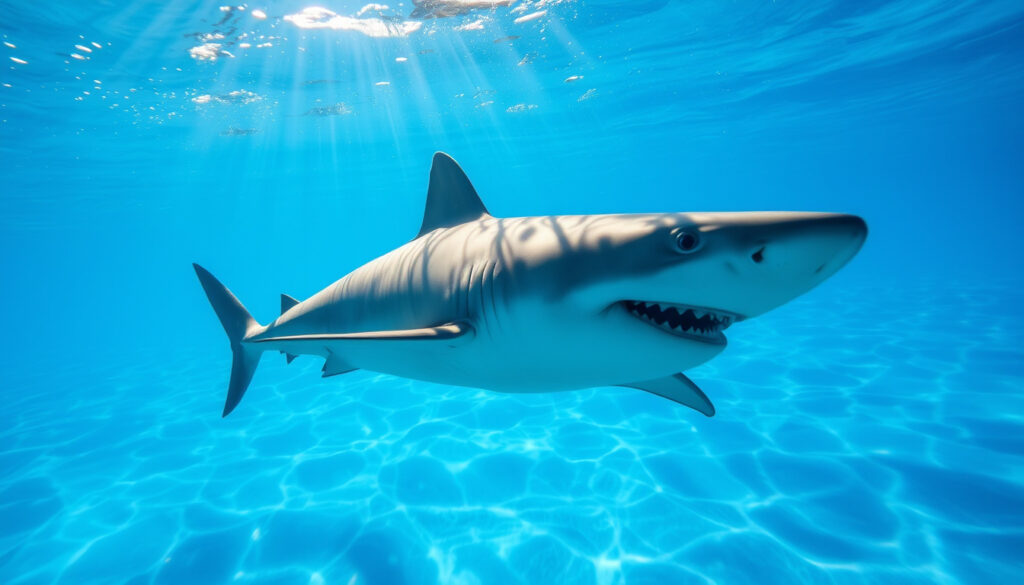
Great White Shark: Facts, Size, Behavior, and Conservation Status
Few animals capture the imagination—and the fear—quite like the great white shark. But behind the Hollywood reputation lies a creature that is far more vulnerable than many realize.
Average length: 15–20 ft (4.5–6 m) ·
Average weight: 2,400–4,500 lb (1,100–2,000 kg) ·
Known bite force: 4,000 psi estimated ·
Number of teeth: Approximately 300 ·
Global population estimate: 3,000–5,000 adults ·
IUCN status: Vulnerable
Quick snapshot
- 15–20 ft (4.5–6 m) total length (NOAA Fisheries)
- 2,400–4,500 lb (1,100–2,000 kg) mass (NOAA Fisheries)
- Largest predatory fish on Earth (NOAA Fisheries)
- 3,000–5,000 adults estimated globally (IUCN Red List)
- IUCN Vulnerable; Mediterranean Critically Endangered (IUCN Red List)
- Protected in many jurisdictions (e.g., US, Australia, EU) (NOAA Fisheries)
- Primary diet: pinnipeds (seals, sea lions) (NOAA Fisheries)
- Confirmed predator: killer whales (orcas) (National Geographic)
- Juveniles: fish, rays, other sharks (NOAA Fisheries)
Seven key facts, one pattern: great whites are large but fragile, slow to reproduce, and far more threatened than threatening.
| Fact | Value |
|---|---|
| Scientific name | Carcharodon carcharias |
| Maximum recorded length | 20 ft (6.1 m) (National Geographic) |
| Maximum recorded weight | ~5,000 lb (2,268 kg) (CMS species profile) |
| Gestation period | 11–12 months (estimated) |
| Litter size | 2–10 pups |
| Global range | All temperate and tropical oceans except polar regions |
| IUCN Red List status | Vulnerable |
Are great white sharks aggressive to humans?
How many great white shark attacks happen annually?
Great white shark attacks on humans are rare and usually a case of mistaken identity—a surfer or surface silhouette resembles a seal. The International Shark Attack File (University of Florida) records fewer than 100 unprovoked bites globally per year, with less than 10 fatal. Most bites occur in nearshore waters where seals—the shark’s preferred prey—are present.
What triggers a great white shark bite?
“Great whites are not mindless killers; they are curious apex predators that typically release human victims after a single bite.”
— Dr. Chris Lowe, Director of the California State University Shark Lab
The pattern is consistent: the shark takes a bite, realizes it’s not a seal, and swims away.
For swimmers and surfers, the risk is vanishingly small—about 1 in 3.7 million odds of a fatal shark encounter. The real danger is to the sharks themselves.
The implication: fear of great whites is wildly disproportionate to the actual threat. The data says humans are not prey.
Could a great white survive in UK waters?
Have great white sharks ever been seen in the UK?
There have been unconfirmed sightings but no verified records of a great white in UK waters. The Marine Conservation Society (UK charity) considers the species absent from British seas. The UK’s waters often drop below 12 °C in winter, below the great white’s preferred range.
What sea temperatures do great whites need?
Great whites prefer temperate and subtropical waters (12–24 °C); UK waters often drop below 12 °C in winter, limiting their potential range.
Why this matters: legal protection varies by country. A shark protected in Australian waters can be legally caught the next day in international waters.
How many great whites are left?
Why are great white sharks endangered?
Global adult population estimated at 3,000–5,000 individuals (2023 data from IUCN and NOAA). Listed as Vulnerable by the IUCN; regional populations (e.g., Mediterranean) are Critically Endangered. Main threats: bycatch, finning, habitat loss, and slow reproduction (maturity at 15+ years).
What conservation measures protect great whites?
NOAA describes the white shark as “vulnerable to declines because of large size and low productivity, including slow growth, late maturity, and longevity.” The species is listed on CITES Appendix II and CMS Appendix I and II. However, NOAA Farallones (US government agency) notes it is not listed under the U.S. Endangered Species Act, though a petition argues it should be.
Conservationists warn that the current population estimate is a rough range—exact numbers are unknown. Without stronger protections, the species could slide from Vulnerable to Endangered within decades.
The pattern: without a binding international treaty, the species remains at risk wherever protection lapses.
What eats a great white shark?
Do orcas hunt great white sharks?
Killer whales (orcas) are the only confirmed natural predator of adult great white sharks. Marine biologist Dr. Alison Kock (South African National Parks) describes documented predation events off Gansbaai, South Africa, where orcas targeted great whites for their nutrient-rich livers. National Geographic (science media) reports that after such attacks, great whites abandoned the area for months.
“We’ve seen orcas work together to flip a great white upside down, inducing tonic immobility, then bite into the liver.”
— Dr. Alison Kock, South African National Parks
What other predators target great whites?
Juvenile great whites may be preyed upon by larger sharks, including tiger sharks. But the primary cause of great white mortality is human activity: bycatch from commercial fishing, finning, and trophy hunting. A National Geographic (science media) reports population declines across all oceans.
The trade-off: orcas are a natural check, but fishing nets are a far greater killer.
What smell do sharks hate?
Is there any scent that repels sharks?
No scientifically proven scent reliably repels all shark species, including the great white. Some anecdotal evidence suggests putrefied shark carcass odor may deter, but this is not confirmed in controlled studies. Florida Museum of Natural History (research institution) states that scent-based repellents have shown inconsistent results.
Do shark repellents work?
Electric repellents, such as the Shark Shield, show more promise than scent-based methods. These devices create an electric field that irritates sharks’ ampullae of Lorenzini. However, Australian Marine Conservation Society (NGO) cautions that no repellent is 100% effective.
The paradox: the “shark-repelling scent” is a persistent myth. If you’re looking for a smell to keep sharks away, the best answer is: none proven.
What is the furthest inland a shark has been found?
How far up the Mississippi have bull sharks been recorded?
Bull sharks are known to swim up the Mississippi River as far as Alton, Illinois, near St. Louis—approximately 1,800 miles from the Gulf of Mexico. This is the furthest inland a shark has ever been documented. National Geographic (science media) confirms these records.
Can great white sharks swim in freshwater?
Great white sharks are obligate saltwater fish—they cannot survive in freshwater. Their bodies lack the osmoregulatory adaptations that allow bull sharks to tolerate brackish and fresh water. NOAA Fisheries (US government agency) states that great whites die quickly in freshwater environments.
The implication: if you’re worried about a great white in a lake, don’t. But a bull shark is a different story.
What is the #2 deadliest shark?
Which shark species has the most fatal attacks on humans?
Historical data from the International Shark Attack File (University of Florida) lists the tiger shark as second in fatal attacks, but the bull shark often ranks second in total incidents. The great white accounts for the highest number of fatal attacks—about 354 unprovoked fatalities since records began.
How does the bull shark compare to the great white?
Bull sharks are considered more dangerous to humans in shallow waters due to their proximity to populated coastal areas and freshwater rivers. The International Shark Attack File (University of Florida) notes that bull sharks are responsible for many attacks in brackish environments. The exact ranking varies by source, but the consensus is: great white first, then a close contest between tiger and bull.
The catch: deadliest depends on how you measure—total deaths vs. encounter rate. Bull sharks have a higher bite-per-encounter ratio in risky areas.
Confirmed facts vs. what’s unclear
Confirmed facts
- Great white sharks are the largest predatory fish alive.
- Killer whales are a known predator of great white sharks.
- Bull sharks have been documented in the Mississippi River up to Alton, Illinois.
- Great whites are not true freshwater species; they die in freshwater.
What’s unclear
- Exact global population count (estimate range of 3,000–5,000 is uncertain).
- Whether great white sharks ever entered UK waters historically; no verified record exists.
- The precise scent repelling sharks—no scientifically proven repellent odor.
- The exact number of fatal attacks attributed to bull vs. tiger shark (#2 deadliest) varies by source.
- Human shark attack fatalities are extremely low (<10 per year globally) but exact figures vary annually.
Summary
The great white shark is not the serial killer of the sea—it’s a vulnerable apex predator struggling against overfishing, slow reproduction, and climate change. For conservationists and policymakers, the choice is clear: strengthen international protection and enforcement, or watch a species that has roamed the oceans for 16 million years slide toward extinction.
en.wikipedia.org, cms.int, marinebio.org, media.fisheries.noaa.gov, agriculture.gov.au, instagram.com, anantamias.com
Frequently asked questions
How fast can a great white shark swim?
Great whites can reach burst speeds of up to 25 mph (40 km/h) when attacking prey, but they typically cruise at 2–3 mph.
How long do great white sharks live?
Scientists estimate a lifespan of 30–70 years, with some individuals possibly living longer based on vertebral growth rings.
Do great white sharks sleep?
They must keep swimming to force water over their gills for oxygen, so they do not sleep in the same way mammals do. They enter restful periods while still moving.
What attracts great white sharks to an area?
Seal colonies, sea lion rookeries, and areas with high concentrations of fish or whale carcasses are primary attractants.
Can great white sharks be kept in aquariums?
Very few aquariums have succeeded. The Monterey Bay Aquarium kept a great white for 198 days in 2004–2005, but most die quickly in captivity due to stress and injury.
How do great white sharks reproduce?
They are ovoviviparous: embryos develop inside the mother and are nourished by a yolk sac. Litter size is 2–10 pups, born after an estimated 11–12 month gestation.
Are great white sharks protected by law?
Yes, in many countries. They are listed on CITES Appendix II, CMS Appendix I and II, and protected in the US, Australia, New Zealand, and the EU.
What is the difference between a great white and a bull shark?
Great whites are larger, strictly marine, and prefer cooler waters. Bull sharks are smaller, tolerate freshwater, and are more aggressive in shallow, murky environments.
Related reading
More related posts
 TheLaptopAdviser Expert Gaming – Trusted 2025 Reviews Guide
 Correa Alba: White Correa Care for Sun, Height & Growing
 Meriton Suites Bondi Junction: Prices, Pool & Parking (2026)
 Coles West Ryde: Hours, Phone, Parking & Directions
 Water Bottles Ireland: Best Buyers Guide 2025
 Palliative Care Meaning – Definition Vs Hospice and Timing
 Warren Tredrea: Bio, Career, Board Removal & Legal Woes
 James Nelson-Joyce: Biography, Net Worth, and Career
