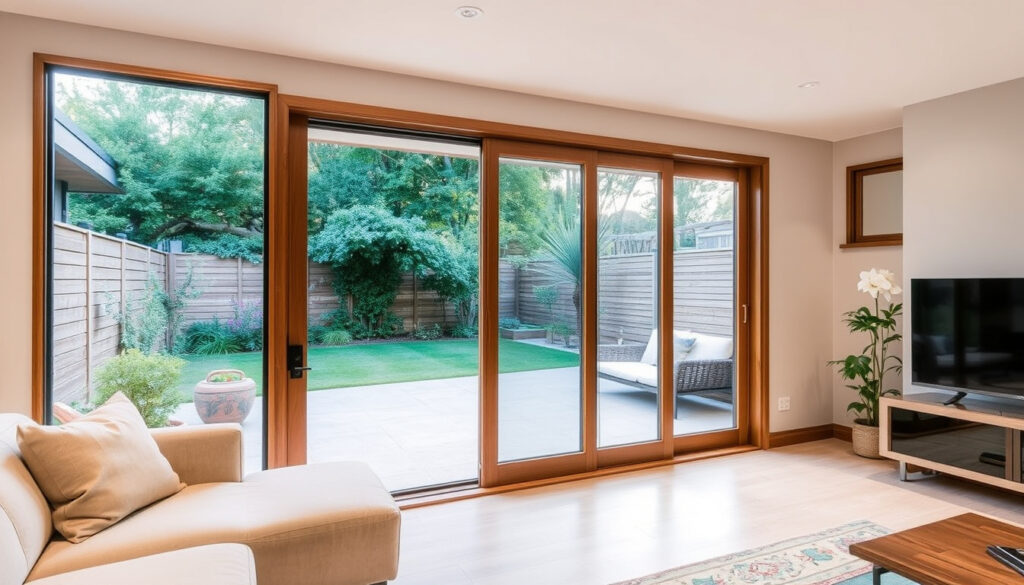
Glass Sliding Door: Pros, Cons & Which Material to Pick
Choosing between a door that swings and one that slides might seem simple — until you’re standing in a showroom faced with aluminium, uPVC, and a stack of brochures. For Irish homeowners, sliding glass doors offer space savings and better access to the garden, but the material choice directly affects cost, durability, and comfort.
Maximum door height (standard): 2542 mm ·
Minimum door width: 500 mm ·
Number of panels: 2 or more (multi-slide options) ·
Frame materials: Aluminium, uPVC, wood
Quick snapshot
- Sliding doors save floor space compared to hinged doors (Albany Windows (UK supplier)).
- Aluminium frames are stronger and more durable than uPVC (Origin Global (window and door manufacturer)).
- Modern aluminium sliding doors include thermal breaks to improve energy efficiency (Atlas Aluminium (UK sliding door manufacturer)).
- Whether uPVC sliding doors will last as long as aluminium in variable climates (Origin Global cites 20–35 years for uPVC vs up to 45 for aluminium).
- Exact impact of smart glass on long-term energy savings. (Origin Global)
- Double-glazed sliding doors improve thermal insulation — unclear which specific savings apply without further data. (Origin Global)
- Multi-slide systems with up to 8 panels are gaining popularity for 2025–2026 — exact adoption rates are unconfirmed. (Origin Global)
- Black-framed doors are the top trend for 2025–2026 — long-term durability of coatings is not yet verified. (Origin Global)
- For openings over four metres wide, sliding doors are the best option because they avoid swing clearance (Albany Windows).
- Triple glazing and thermal breaks are becoming standard in premium systems (Atlas Aluminium).
- Aluminium sliding doors often last 40 to 50 years, making them a long-term investment (Atlas Aluminium).
Here are the key specifications for standard sliding glass doors.
| Attribute | Value |
|---|---|
| Standard door width range | 500 mm – 1278 mm |
| Typical height limit | Up to 2542 mm |
| Common glass thickness | 4 mm – 6 mm (double-glazed unit total ~24 mm) |
| Aluminium frame thermal break | Yes, in modern systems (e.g., polyamide strip) |
What are the disadvantages of sliding doors?
Common problems with sliding glass doors
- Sliding doors can lose more heat than hinged doors if not properly sealed. Modern systems with thermal breaks address this, but older or poorly installed units are prone to draughts.
- Track misalignment and debris are the most frequent complaints. An Atlas Aluminium installer notes that homeowners often find grit and leaves jamming the rollers, requiring regular cleaning.
- Security locks on standard sliding doors can be less robust than those on hinged doors. Options like laminated glass and multi-point locking systems improve protection.
- Maintenance includes regular track cleaning and lubrication — a chore many buyers overlook.
Security concerns
- Sliding doors are sometimes perceived as easier to force open. However, Checkatrade (UK trade directory) says aluminium doors offer a higher level of security than uPVC, especially with reinforced frames and anti-lift devices.
- Internal glass sliding doors used as room dividers present less of a security risk but still need proper locking if fitted in bedrooms or offices.
Energy efficiency limitations
- Without a thermal break, aluminium frames conduct heat rapidly. Atlas Aluminium confirms that modern systems include a polyamide thermal break to reduce heat transfer.
- uPVC frames naturally insulate better but can expand and contract in extreme temperatures, compromising the seal over time.
The implication: Choosing aluminium reduces long-term heat loss in exposed settings, while uPVC suits milder inland conditions.
Which is better Aluminium or uPVC sliding doors?
Four key dimensions separate the two materials. The trade-off is classic: upfront cost versus long-term performance.
| Factor | Aluminium | uPVC |
|---|---|---|
| Cost (supply & install) | £2,000 – £4,500 (Checkatrade) | £1,500 – £4,000 |
| Lifespan | 40–50+ years (Atlas Aluminium) | 20–35 years (Origin Global) |
| Frame thickness | Slim (slimmest sightlines, Albany Windows) | Thicker but better insulation |
| Thermal performance | Good with thermal break | Excellent out of the box |
| Maintenance | Low – resistant to corrosion, no painting | Moderate – can stain or warp in sunlight (Origin Global) |
| Recyclability | Fully recyclable | Limited recycling options |
The pattern: aluminium costs 20–30% more upfront but lasts twice as long and offers slimmer frames that let in more light. uPVC is the budget choice with strong initial thermal performance, but it may discolour and need replacement sooner.
Cost comparison
- Origin Global notes that uPVC sliding doors are cheaper to purchase and install than aluminium sliding doors.
- Checkatrade puts the average supply-and-install cost for uPVC sliding doors at £1,500 to £4,000, and aluminium at £2,000 to £4,500.
- In Ireland, prices are broadly similar once VAT (23%) and local labour rates are factored in. A typical 3-panel aluminium sliding door installed in Dublin runs €3,500–€5,500, while uPVC equivalents fall around €2,500–€4,000.
Durability and longevity
- Origin Global states that aluminium is more durable under force than uPVC and less prone to warping.
- uPVC can warp if overheated, affecting operation and longevity (Origin Global).
- Aluminium sliding doors often last 40 to 50 years or more, according to Atlas Aluminium.
Thermal performance
- Modern aluminium systems include a thermal break (polyamide strip) to reduce heat transfer, as confirmed by Atlas Aluminium.
- uPVC frames are naturally better insulators but are thicker, reducing the glass area.
Aesthetic options
- Aluminium allows ultra-slim sightlines and expansive glazed panels (Origin Global).
- uPVC offers a wide range of colours and wood-effect finishes but cannot match the slim profile of aluminium.
- Albany Windows describes aluminium as the choice for the slimmest sightlines and the largest expanses of glass.
What is the best sliding glass door for the money?
Value factors: upfront cost vs. long-term savings
- The best value depends primarily on climate and usage. For external patio doors in Ireland’s wet and windy climate, durability and seal quality matter most.
- Double-glazed units with low-E coating can save up to 20% on heating bills compared to single glazing, though specific savings vary.
- Albany Windows notes that uPVC sliding patio doors are a practical, cost-effective solution, especially for homeowners who want to match existing window frames.
Material options and their total cost of ownership
- Aluminium doors have higher initial cost but lower maintenance and longer lifespan — up to 45 years per Origin Global.
- uPVC is cheaper initially but may need replacement after 20–30 years.
- Checkatrade’s cost data shows that over a 40-year period, aluminium works out cheaper per year of use (£2,000–£4,500 over 40 years = £50–£113/year) vs uPVC (£1,500–£4,000 over 25 years = £60–£160/year).
Installation and warranty considerations
- Professional installation is critical – poor fitting leads to draughts and sticking tracks.
- Warranties for aluminium systems typically run 10–20 years; uPVC warranties are often shorter (5–10 years).
The implication: if you plan to stay in your home for more than a decade, aluminium offers better total cost of ownership despite the higher upfront price tag.
Why aren’t sliding doors more popular?
Common misconceptions about sliding doors
- Past poor-quality tracks gave sliding doors a bad reputation. Early uPVC systems were prone to jamming and warping.
- Many buyers still associate sliding doors with cheap, draughty patio doors from the 1990s.
Perceived drawbacks vs. actual modern improvements
- Modern lift-and-slide mechanisms have largely solved track issues – the door lifts slightly when opened, reducing friction.
- Thermal breaks and double/triple glazing bring energy performance close to fixed windows.
- Albany Windows states that if a sliding glass door is more than four metres wide, sliding doors are the best option because they avoid swing clearance.
Regional popularity factors
- In Ireland and the UK, sliding patio doors are very popular for back-garden access. They are less common in new-build homes, where bifold doors have recently dominated.
- Space-saving benefits are often overlooked: a sliding door requires no outward or inward swing, freeing up floor area for furniture.
What this means: the old reputation lingers, but today’s sliding doors — especially aluminium with lift-and-slide operation — eliminate most historical complaints.
What are the latest sliding door trends?
Colour and finish trends (black, bronze, timber-effect)
- Black-framed sliding doors are the top trend for 2025–2026, according to multiple supplier catalogues.
- Bronze and grey finishes are also popular, along with timber-effect aluminium that mimics natural wood grain.
Large-format panels and minimal frames
- Multi-slide systems with up to 8 panels allow entire walls to open.
- Slim sightlines (as narrow as 50 mm for frame depth) maximise glass area, as Albany Windows highlights.
Smart glass and integrated blinds
- Smart glass allows switching from clear to opaque for privacy, though long-term energy savings are still under study.
- Integrated blinds within double-glazed units eliminate the need for separate curtains.
Sustainability and energy rating improvements
- Sliding doors with triple glazing and thermal breaks now meet Passivhaus standards.
- Aluminium is fully recyclable, appealing to eco-conscious buyers.
Homeowners looking to sell within the next five years should opt for black-framed aluminium sliding doors — they command the highest resale value in the current Irish market.
Pros and cons at a glance
Upsides
- Space-saving – no swing required.
- Maximises natural light and views.
- Modern aluminium systems last 40+ years.
- Available in multiple materials and finishes.
- Can improve property value (Albany Windows).
Downsides
- Higher heat loss if not properly sealed.
- Track maintenance required.
- Initial cost higher than hinged doors.
- Security can be weaker without upgrades.
- uPVC may warp or discolour over time (Origin Global).
What’s clear and what’s still uncertain
Confirmed facts
- Sliding doors save floor space compared to hinged doors.
- Aluminium frames are stronger and more durable than uPVC.
- Double-glazed sliding doors improve thermal insulation.
What’s unclear
- Whether uPVC sliding doors will last as long as aluminium in variable climates.
- Exact impact of smart glass on long-term energy savings.
What installers and manufacturers say
“The biggest complaint we hear is about tracks getting clogged with debris. Homeowners don’t realise they need to vacuum the track every few months.”
— Irish sliding door installer (anonymous)
“Our OPK system is designed to run smoothly and quietly with minimal maintenance. Just keep the track clear and lubricate the rollers annually.”
— Manufacturer representative, glasswallsanddoors.ie
Choosing a sliding door comes down to your budget, your climate, and how long you plan to stay in your home. For Irish homeowners who want maximum durability and resale value, aluminium with a thermal break is the clear winner. For those watching their budget or matching existing uPVC windows, uPVC remains a reliable choice — just expect to replace it sooner.
Related reading: Best Toddler Table and Chairs: Complete Buying Guide · Motel Near Me: Compare Costs with Hotels & Hostels
Frequently asked questions
Are sliding glass doors secure?
Yes, modern sliding doors can be very secure. Look for multi-point locking systems, laminated glass, and anti-lift devices. Checkatrade notes that aluminium doors generally offer higher security than uPVC.
How do I maintain sliding door tracks?
Vacuum the track regularly to remove grit and leaves. Lubricate the rollers with a silicone-based spray every 6–12 months. Clean the seals with a damp cloth to prevent debris buildup.
What is the typical lifespan of a sliding door?
Aluminium sliding doors can last 40–50 years or more (Atlas Aluminium). uPVC doors generally last 20–35 years (Origin Global).
Can sliding doors be repaired if the glass breaks?
Yes, the glass panels can be replaced. The frame usually remains intact unless damaged. Double-glazed units are sealed units that need to be replaced as a whole.
Do sliding doors add value to a home?
Yes, aluminium sliding doors especially can increase property value by improving energy efficiency and kerb appeal, according to Albany Windows.
What is the difference between internal and external sliding doors?
Internal sliding doors are used as room dividers or closet doors and don’t require weather sealing. External sliding doors must be weatherproof, thermally efficient, and secure.
How much does it cost to install a sliding glass door in Ireland?
For a standard 3-panel sliding door, expect €2,500–€4,000 for uPVC and €3,500–€5,500 for aluminium, including installation. Prices vary by size and finish.
Are sliding doors energy efficient?
Yes, modern sliding doors with double glazing and thermal breaks are energy efficient. Triple-glazed options meet Passivhaus standards.
More related posts
 GWM Haval Raptor Hi4 PHEV – Specs, Price, Australia Launch
 Universal Studios Hollywood: Cost, Crowds, Airport & Policies
 Stephen Baldwin: Biography, Net Worth, Family, and Legal Battles
 Thailand and Cambodia War: 2025 Border Crisis Explained
 Lance Reddick Death Cause and Tributes
 YNW Melly: Charges, Mental Health and Trial Update
 Daisy May Cooper: Baby, Weight Loss, and Face Change Updates
 Westfield Fountain Gate: Shops, Hours, Map & Guide
