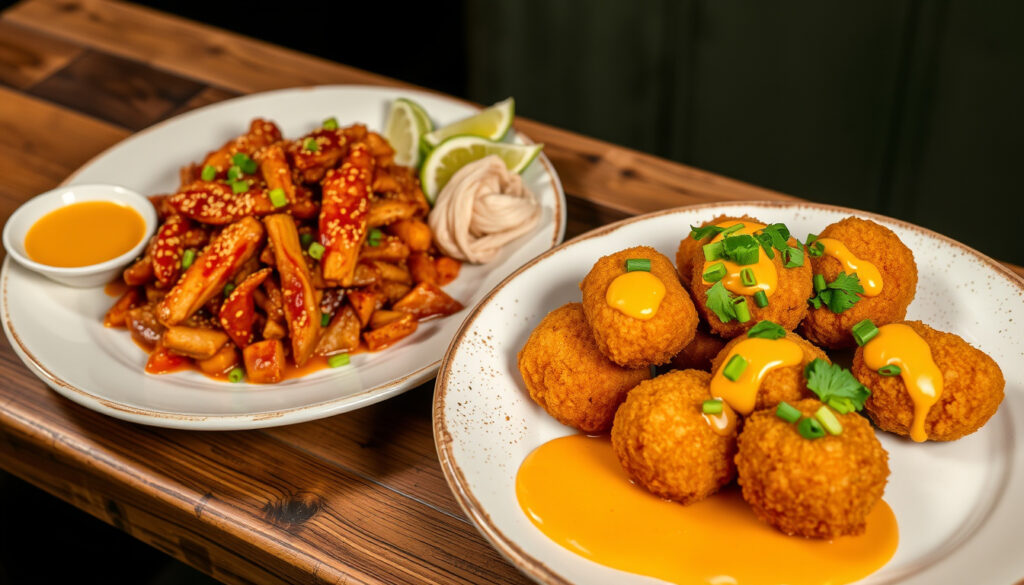
Bang Bang Chicken: Authentic vs Crispy Recipes Guide
Few chicken dishes spark as much confusion as bang bang chicken. One camp insists it’s a poached Sichuan street food with numbing spice and sesame depth; another swears by crispy fried tenders doused in creamy chili sauce. Both exist, and both are delicious—but only one is the original. This guide sorts through the history, the sauce science, and the exact steps so you can make either version with confidence.
Origin: Sichuan, China · Traditional Prep: Poached chicken with sauce · Modern Style: Crispy fried or baked chicken · Key Sauce Ingredients: Mayo, chili sauce, honey
Quick snapshot
- Sichuan dish named for the “bang bang” pounding that shreds the chicken (Taste Cooking)
- Authentic version uses poached or steamed chicken, never fried (Red House Spice)
- Traditional sauce combines chili oil, black vinegar, sesame oil, and Sichuan peppercorns (Two Kooks In The Kitchen)
- Exact spice heat level in original restaurant versions varies by chef
- No single standardized recipe exists across Sichuan provinces
- Street food dish with roots in early 20th-century Sichuan
- Modern crispy adaptation gained popularity in Western Chinese-American restaurants over past 30 years
- Home cooks increasingly attempt authentic Sichuan version using recipe blogs as guides
- Fusion variations (noodles, salads, wraps) continue expanding the dish’s reach
| Attribute | Value |
|---|---|
| Dish Type | Appetizer |
| Region | Sichuan, China |
| Prep Time | 20 minutes |
| Cook Time | 15 minutes |
| Servings | 4 |
What is Bang Bang Chicken?
Bang bang chicken is a cold Sichuan appetizer with poached chicken, crunchy cucumber, and a spicy, nutty sauce. The name comes from the bamboo batons vendors used to pound and shred the cooked chicken—the distinctive “bang bang” sound echoed through street markets across Chengdu and surrounding provinces (Taste Cooking).
Origin and history
The dish emerged in early 20th-century Sichuan as an affordable street food. Vendors poached a whole chicken, then shredded it tableside or pre-shredded into tender, sauce-ready strands. Cucumber slices provided crunch; the sesame-chili sauce tied everything together. Unlike many Chinese dishes that migrated west intact, bang bang chicken split into two distinct paths: the traditional poached version and the crispy Americanized adaptation (Two Kooks In The Kitchen).
Traditional vs modern versions
The original Sichuan bang bang chicken is never fried. It is poached or steamed, cooled, and torn into bite-sized shreds. The sauce is runny, spicy, and packed with umami—chili oil, black vinegar, soy sauce, ground Sichuan peppercorns, and sesame oil. No mayonnaise, no creamy base. The modern Western version flips the script: crispy fried or baked chicken tenders receive a thick coating of mayonnaise blended with sweet chili sauce, often served as a heavy appetizer or main course rather than a light starter (Red House Spice).
What is bang bang sauce made of?
Bang bang sauce is the defining element of the dish, and its composition differs sharply between traditional and modern preparations. Understanding the two base styles helps you choose—or blend—what works for your palate.
Classic ingredients
The traditional sauce centers on chili oil infused with Sichuan peppercorns, black rice vinegar for brightness, light soy sauce for salt and umami, sesame oil for nuttiness, and a touch of sugar to balance the acidity and heat. Some recipes include tahini or sesame paste; others use peanut butter for depth. The cooking liquid from poaching the chicken often gets stirred in to bind the flavors (Red House Spice).
Sweet and spicy balance
The Sichuan version walks a fine line: numbing from the peppercorns, heat from the chili oil, tanginess from the vinegar, and subtle sweetness to round the edges. Too much vinegar overwhelms the sesame notes; too little sugar leaves it harsh. The ratio shifts by family and restaurant, but a starting point is roughly 2 parts chili oil to 1 part vinegar, with soy sauce and sesame oil rounding out the volume (The Woks of Life).
What kind of sauce is used in Bang Bang Chicken?
Two entirely different sauces carry the bang bang name, and knowing which one you want before you start cooking saves frustration. The ingredients and technique are completely distinct.
Authentic sesame sauce
The authentic sauce is oil-based and pourable. Chili oil sits on top; you mix it into the other components just before serving so the fats and liquids stay integrated rather than separating. Sichuan peppercorns deliver the signature “mala” sensation—simultaneous numbness and tingling. Black vinegar adds a smoky, aged acidity similar to Chinese black rice vinegar. Sesame paste or tahini provides body and richness without the creaminess of dairy (Umami Days).
Western creamy version
The Western adaptation replaces the sesame-chili foundation with a mayonnaise base. Kewpie mayo (Japanese-style with added umami) works best, blended with sweet chili sauce, a squeeze of honey, rice vinegar, and often a dash of sriracha for heat. Some versions add garlic or ginger; others keep it simple. The result coats crispy chicken like a thick dressing rather than a poured sauce. This version travels better, holds up in lunchboxes, and appeals to palates accustomed to creamy chicken salads (Two Kooks In The Kitchen).
The two sauces are not interchangeable mid-recipe. Switching from sesame to mayo means reworking the entire dish concept—texture, temperature, and serving style all shift with the sauce.
How to make Chinese Bang Bang Chicken?
Making the authentic Sichuan version at home takes about 35 minutes total, most of it hands-off while the chicken poaches. The key steps are straightforward: gentle cooking, careful shredding, and a sauce that comes together in minutes.
Poaching the chicken
Place skin-on chicken thighs or breasts in a pot with cold water, a thumb of ginger, and a few scallion stalks. Bring to a gentle simmer—never a rolling boil, which toughens the meat. Cook 10 to 12 minutes for breasts, 15 to 18 minutes for thighs, until the internal temperature hits 165°F (74°C). Immediately transfer to an ice bath to stop cooking and preserve moisture. Reserve at least half a cup of the poaching liquid for the sauce (The Woks of Life).
Preparing the sauce
In a bowl, combine 3 tablespoons of light soy sauce, 2 tablespoons of black rice vinegar, 1 tablespoon of sesame oil, 1 teaspoon of sugar, and half a teaspoon of salt. Separately, heat 3 tablespoons of vegetable oil with 1 tablespoon of Sichuan peppercorns until fragrant, about 2 minutes. Pour the hot oil-peppercorn mixture over the soy-vinegar base, stir well, and thin with 2 to 4 tablespoons of the reserved poaching liquid until the sauce coats a spoon without pooling (Red House Spice).
Assembly steps
Shred the cooled chicken by hand into rough strips or pull it apart with two forks. Fan the cucumber slices across a shallow plate or bowl, mound the shredded chicken on top, and spoon the sauce over everything. Garnish with toasted peanuts, sesame seeds, and sliced scallions. Serve immediately at room temperature or chilled—the dish tastes better once the chicken has absorbed the sauce for 10 to 15 minutes (From A Chef’s Kitchen).
How to make sauce for bang bang chicken?
Whether you prefer the traditional sesame version or the Western creamy adaptation, the sauce is the star. Nailing the consistency and flavor balance elevates even a mediocre chicken prep into something memorable.
Ingredients ratios
For the traditional sauce, the ratio of oil to vinegar to soy sauce anchors the flavor. Start with 3 parts chili oil, 2 parts soy sauce, 1 part black vinegar, and a tablespoon of sesame paste or tahini. Add ground Sichuan peppercorns to taste—begin with a half teaspoon, then adjust since the numbness intensifies as it sits. For the creamy Western version, combine 1 cup of Kewpie or quality mayo, 3 tablespoons of sweet chili sauce, 1 tablespoon of honey, and a teaspoon of rice vinegar. Whisk until smooth (Two Kooks In The Kitchen).
Mixing tips
For the oil-based sauce, always add hot oil to cold liquids gradually, never the reverse, to avoid scrambled eggs in your sauce. Let the peppercorns steep in the oil for 2 full minutes before straining or leaving them in for texture. For the creamy sauce, room-temperature ingredients blend more smoothly; refrigerate the finished sauce for at least 30 minutes to let flavors meld before tossing with chicken.
Make-ahead storage
The traditional sauce keeps in a sealed jar in the refrigerator for up to 2 weeks—the oil layer separates naturally and reconstitutes when stirred. The creamy sauce keeps similarly for 1 to 2 weeks, though the texture may thicken; thin with a splash of milk or water if needed. Both sauces freeze well for up to 3 months in airtight containers, though the oil-based version may need re-whisking after thawing due to separation (Umami Days).
Mastering the sauce means you can improvise with whatever chicken you have on hand—whether poached, roasted, or even leftover rotisserie. The sauce carries the dish; the protein is flexible.
How to make Bang Bang Chicken — Step by Step
Five actionable steps take you from raw chicken to plated bang bang chicken at home. This sequence covers both the traditional poached method and the modern crispy alternative so you can choose your path.
- Poach or crisp the chicken: For authentic bang bang chicken, submerge chicken breasts in simmering water with ginger and scallions for 10 to 12 minutes until cooked through. Ice-bath immediately. For the crispy version, coat chicken tenders in seasoned flour and bake at 400°F (200°C) for 18 to 20 minutes, flipping halfway, until golden and reaching 165°F (74°C) internal temperature.
- Shred the chicken: Cool the poached chicken, then pull it apart by hand or with two forks into thin strips. For crispy chicken, leave the baked tenders whole or tear into large chunks.
- Make the sauce: Traditional style: heat oil with Sichuan peppercorns, combine with soy, vinegar, sesame paste, and enough poaching liquid to reach a pourable consistency. Western style: whisk mayo, sweet chili sauce, honey, and vinegar until smooth.
- Prep the base: Slice cucumber into thin matchsticks or rounds. Arrange on a serving platter or bowl.
- Assemble and serve: Pile shredded chicken over the cucumbers, spoon sauce generously over the top, and finish with toasted peanuts, sesame seeds, and scallions. Let rest 10 minutes before serving so the chicken absorbs the flavor.
Confirmed facts
- Bang bang chicken originates from Sichuan, China
- Traditional preparation uses poached or steamed chicken, never fried
- The dish name refers to the “bang bang” pounding technique
- Traditional sauce includes chili oil, black vinegar, and Sichuan peppercorns
- Modern Western version centers on crispy fried chicken with creamy mayo sauce
- Thighs are preferred over breasts for richer flavor and moisture
What’s unclear
- Exact heat levels in original Sichuan recipes vary by street vendor and family
- No single standardized recipe exists across Sichuan provinces
- Precise historical dating of when the dish first appeared remains uncertain
The traditional sauce is runny with spiciness, numbing, umami, and nuttiness—a sharp contrast to the creamy, sweet, mild American version. They share a name but taste like entirely different dishes.
— Red House Spice (culinary publication specializing in Sichuan cuisine)
Chicken thighs are preferred over breast for more flavor; whole chicken is used in restaurants for tenderness, though home cooks can achieve excellent results with boneless thighs.
— The Woks of Life (food blog focused on Chinese home cooking)
The divergence between traditional and modern bang bang chicken reflects a broader pattern in how Chinese dishes adapt to Western palates. Original recipes prioritize texture and balance: tender poached shreds against crunchy cucumber, spicy and numbing against sweet and sour. Western adaptations flip priorities toward crunch, richness, and portability—qualities that work well in casual restaurant settings but change the character of the dish entirely.
For home cooks, this means you have options rather than obligations. The Sichuan version rewards patience and pays dividends with layers of flavor most people have never tasted. The crispy version satisfies fast and delivers on comfort. Neither is wrong; each just tells a different story about what bang bang chicken can be.
Related reading: Turkey Mince Recipe · How to Cook Asparagus
Frequently asked questions
Is bang bang chicken spicy?
The traditional Sichuan version is notably spicy, carrying heat from chili oil and a numbing sensation from Sichuan peppercorns. The Western creamy version ranges from mild to moderately spicy depending on how much sweet chili sauce or sriracha you add. If you are sensitive to heat, start with half the suggested peppercorns or chili sauce in either recipe.
What chicken cut for bang bang chicken?
Chicken thighs deliver more flavor and moisture than breasts, making them the preferred cut for both traditional and modern preparations. Breasts work if you prefer leaner meat, but thighs handle poaching better without drying out. For crispy versions, chicken tenders or breast strips are standard since they fry evenly and crisp quickly.
Can bang bang chicken be made in advance?
Yes. The chicken can be poached and shredded up to 2 days ahead, stored in an airtight container in the refrigerator. The traditional sauce keeps for 2 weeks; the creamy sauce holds for 1 to 2 weeks. Combine them shortly before serving so the chicken does not become waterlogged or lose its texture from sitting too long in the sauce.
Is bang bang chicken gluten-free?
The traditional sauce is naturally gluten-free if you use tamari instead of soy sauce. The Western creamy sauce is also gluten-free as long as your mayo and sweet chili sauce are certified gluten-free, since some brands use wheat-based stabilizers. Always check labels if you are cooking for celiac or gluten sensitivity.
How spicy is bang bang sauce?
Traditional bang bang sauce carries moderate to strong heat, depending on the chili oil ratio and how much Sichuan peppercorn is added. The numbing quality from the peppercorns makes the spice feel more complex than straightforward burning. Western bang bang sauce ranges from sweet and mild to moderately hot, depending on the brand of sweet chili sauce you use and whether you add extra sriracha.
Bang bang chicken vs bang bang shrimp?
Bang bang shrimp swaps chicken for peeled, tail-off shrimp prepared either poached or crispy-fried. The sauces are identical in either version, and the serving style remains the same. Shrimp cooks faster than chicken—2 to 3 minutes for poached, 3 to 4 minutes for fried—making it a convenient alternative for quick weeknight meals or when you want a smaller portion.
What to serve with bang bang chicken?
Traditional bang bang chicken works as a starter alongside steamed rice and a light vegetable stir-fry, or as part of a spread of cold appetizers. The crispy Western version pairs well with macaroni salad, coleslaw, or fried rice as a main course. Either style fits a casual sharing table or a packed lunchbox with good results.
More related posts
 Jessica Pegula: Husband, Net Worth, Ethnicity, and Career Highlights
 Catherine O’Hara Death: Facts vs Rumors on Cause
 When Is Cyclone Alfred Going to Hit – SE Queensland Landfall Date
 Wimbledon 2018 Results: Champions, Scores & Upsets
 Robert Menzies: Australia’s Longest-Serving Prime Minister
 Weight Loss Calculator: How to Use It and Why It Might Be Wrong
 Sabrina Carpenter Height – 5’0″ (152 cm), Swift Comparison
 Jesinta Franklin: Kids, Husband, Net Worth & Career Guide
