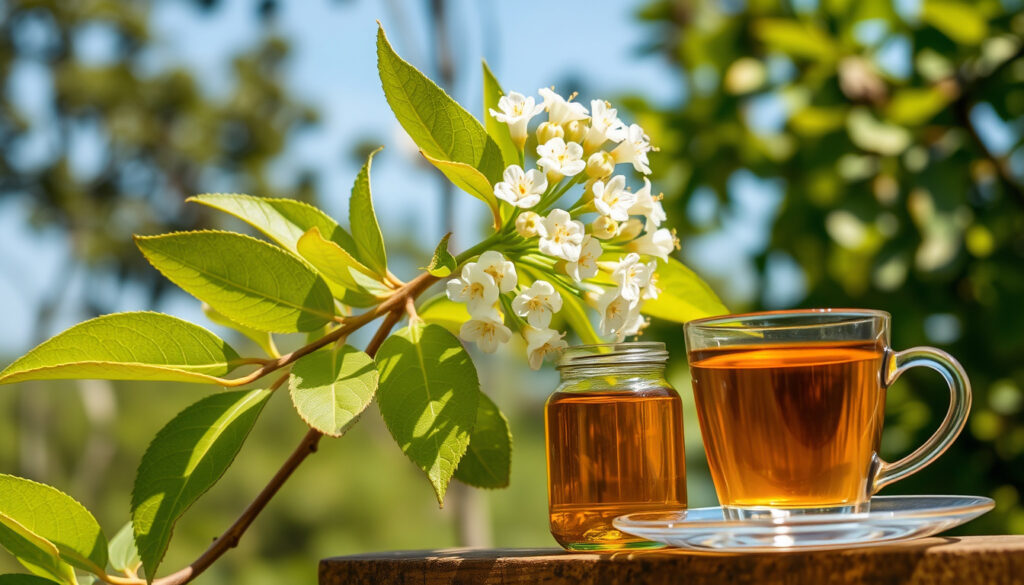
Lemon Myrtle: Uses, Growing Guide & Health Benefits
There’s something special about growing a plant that smells like lemon but doesn’t need the fuss of citrus trees. Lemon myrtle (Backhousia citriodora) is an Australian native that delivers a powerful citrus scent and a surprising list of practical uses, from seasoning food to fighting bacteria.
Botanical name: Backhousia citriodora · Family: Myrtaceae · Native region: Australia (Queensland, New South Wales) · Key compound: Citral (up to 95% in essential oil) · Antimicrobial activity (cited): Against Staphylococcus aureus, Escherichia coli, Pseudomonas aeruginosa
Quick snapshot
- Lemon myrtle oil shows antimicrobial activity against common bacteria (PMC, a peer‑reviewed research database)
- Citral content in the essential oil reaches up to 95% (Warndu, an Indigenous‑owned brand)
- The leaf extract has antioxidant and anti‑inflammatory properties (PMC) (PMC, a peer‑reviewed research database)
- Long‑term safety of high‑dose internal use
- Effect on specific insect species beyond midges
- Long‑term effects of regular topical application in high concentrations
- Traditional Aboriginal use of lemon myrtle as a bushfood and medicine dates back thousands of years (Warndu)
- Growing interest in lemon myrtle as a natural food preservative
- Potential for commercial insect‑repellent products based on citral
Six facts give a quick overview of lemon myrtle’s identity:
| Scientific Name | Backhousia citriodora |
|---|---|
| Native to | Australia (Queensland, New South Wales) |
| Active Compound | Citral |
| Mature Height | 6–10 m |
| Sun Requirement | Full sun to partial shade |
| Harvest Time | After flowering, usually autumn |
What is lemon myrtle used for?
- Culinary uses: Leaves are used for tea, syrups, and baked goods, providing a citrus flavour without the bitterness of lemon zest (Leafy Heaven, a native plant nursery).
- Essential oil: Steam‑distilled oil is used as a natural insect repellent and antimicrobial agent in skincare and surface disinfectants (PMC).
- Traditional medicine: Indigenous Australians crushed leaves to inhale for headaches and made antiseptic pastes for wounds (Warndu).
The implication: Lemon myrtle isn’t just a pretty ornamental — it’s a multi‑purpose plant with culinary, medicinal, and practical applications backed by both tradition and lab data.
Where is the best place to plant a lemon myrtle tree?
- Sunlight: Full sun to partial shade – at least 4–6 hours of direct sun daily (Leafy Heaven).
- Soil: Well‑drained, slightly acidic (pH 5.5–7.0). Waterlogged soil can lead to root rot (Leafy Heaven).
- Wind protection: Shelter from strong winds, especially in coastal and exposed gardens (Leafy Heaven).
What this means: Choose a warm, sunny spot with good drainage — heavy clay soils will need amendment. The plant is forgiving in partial shade, but full sun yields the strongest leaf aroma.
How to grow lemon myrtle?
- Propagation: Can be grown from seed or semi‑hardwood cuttings taken in late summer (Leafy Heaven).
- Watering: Regular watering during the first two years; once established, water only during extended dry spells.
- Pruning: Prune after flowering to maintain a compact shape and encourage bushier growth.
- Feeding: Apply a balanced, slow‑release fertiliser in spring and early autumn.
The catch: Growing from seed takes patience — germination can be slow and uneven. Cuttings offer a faster, more reliable route.
Are lemon myrtle roots invasive?
- Compared to many other tree species, lemon myrtle roots are generally non‑invasive (Leafy Heaven).
- It is considered safe to plant near building foundations, pathways, and paved areas.
- The tree prefers well‑drained soil; constantly wet conditions can trigger root problems.
Why this matters: Homeowners can plant lemon myrtle close to the house without worrying about structural damage — a real advantage over many other garden trees.
How big does lemon myrtle grow?
- Height: 6–10 metres in optimal conditions, but can be pruned to 2–3 metres (Leafy Heaven).
- Width: 3–5 metres.
- Growth rate: Moderate to fast — about 0.5–1 metre per year once established (Leafy Heaven).
What this means: With regular pruning, lemon myrtle can be a manageable 3‑metre shrub, but if left unpruned it becomes a full‑sized tree. Plan accordingly.
For gardeners who value compact size, annual pruning is non‑negotiable. A 3‑metre lemon myrtle fits neatly into most suburban backyards and still produces enough leaves for tea and oil.
The takeaway: Regular pruning keeps the tree compact and productive.
What does lemon myrtle do to the body?
- Antimicrobial: Lemon myrtle oil has been shown to inhibit bacteria such as Staphylococcus aureus and E. coli (PMC).
- Antioxidant and anti‑inflammatory: The leaf extract contains compounds that reduce oxidative stress and inflammation (PMC).
- Calming effect: Traditionally, crushed leaves were inhaled for headaches, and the oil is used in aromatherapy for relaxation (Warndu).
The implication: While promising, more human studies are needed to confirm these effects.
Can lemon myrtle grow in pots?
- Yes, with a large pot (at least 40 cm diameter) and good drainage (Leafy Heaven).
- Use quality potting mix and ensure the pot has drainage holes.
- Water regularly and feed with slow‑release fertiliser in spring and autumn.
What this means: Container growing is feasible for smaller spaces, but the tree will need occasional repotting to avoid root‑bound stress.
Clarity check: What we know and what we don’t
Confirmed facts
- Lemon myrtle oil has proven antimicrobial activity against Staphylococcus aureus, Escherichia coli, and Pseudomonas aeruginosa (PMC).
- Citral content in the essential oil is up to 95% (Organic Merchant, a tea and wellness retailer).
- The plant can be grown in containers when given a large pot (≥40 cm diameter) (Leafy Heaven).
What’s unclear
- Long‑term safety of high‑dose internal consumption of lemon myrtle oil.
- Effectiveness against insect species other than midges (e.g., mosquitoes, ticks).
- Long‑term safety of regular topical application in high concentrations.
“The leaf and terminal branches are steam distilled for a citral-rich oil used as a lemon flavor, fragrance, and aromatherapy oil component.”
— PMC review (peer‑reviewed pharmacology research)
“Lemon myrtle leaf was used as food flavouring and as an insect repellent when volatile leaves were burned on the campfire.”
— Warndu (Indigenous‑owned brand and knowledge hub)
Related reading: **Correa Alba: White Correa Care for Sun, Height & Growing**
For those interested in a deeper dive into its culinary and medicinal uses, the comprehensive lemon myrtle guide offers practical tips on growing and harvesting this versatile native plant.
Frequently asked questions
Can lemon myrtle be used as a herbal tea?
Yes, the dried leaves make a naturally caffeine‑free tea with a strong lemon flavour (Full Leaf Tea Company, a specialty tea retailer).
Does lemon myrtle need a lot of water?
Regular watering is needed during the establishment phase (first 2 years). Once mature, it is relatively drought‑tolerant but benefits from occasional deep watering in dry periods (Leafy Heaven).
How do I harvest lemon myrtle leaves?
Harvest leaves after flowering (autumn) by cutting whole stems. Dry them in a dark, ventilated area for tea or use fresh for cooking.
Is lemon myrtle safe for pets?
There is limited information on pet safety. The essential oil is highly concentrated and should be kept away from animals. Consult a veterinarian before using lemon myrtle products around pets.
Can I use lemon myrtle oil on my skin?
Yes, but always dilute it with a carrier oil (e.g., jojoba or coconut) at about 1–2% concentration to avoid skin irritation. Perform a patch test first.
For the Australian home gardener or natural‑product enthusiast, the decision is clear: lemon myrtle is a versatile native that earns its place in the garden and the kitchen. The trade‑off lies in choosing a sun‑drenched, well‑drained spot — but the reward is a sustainable, scientifically‑backed source of citrus scent and practical utility.
More related posts
 Beef Mince Recipes for Quick Dinners & Health Tips
 Cancer Horoscope Today – Love, Career, Health Insights
 Weight Loss Calculator: How to Use It and Why It Might Be Wrong
 Marfan Syndrome Symptoms: Signs, Red Flags & Diagnosis
 Moises Henriques: Wife, Retirement, IPL, and Portuguese Roots
 Jack Ginnivan: Bio, Trade, Stats, Salary, and Personal Life
 Sonny Angel Australia – Official Stores, Prices and Guide
 Brendan Abbott: Where Is the Postcard Bandit Now
