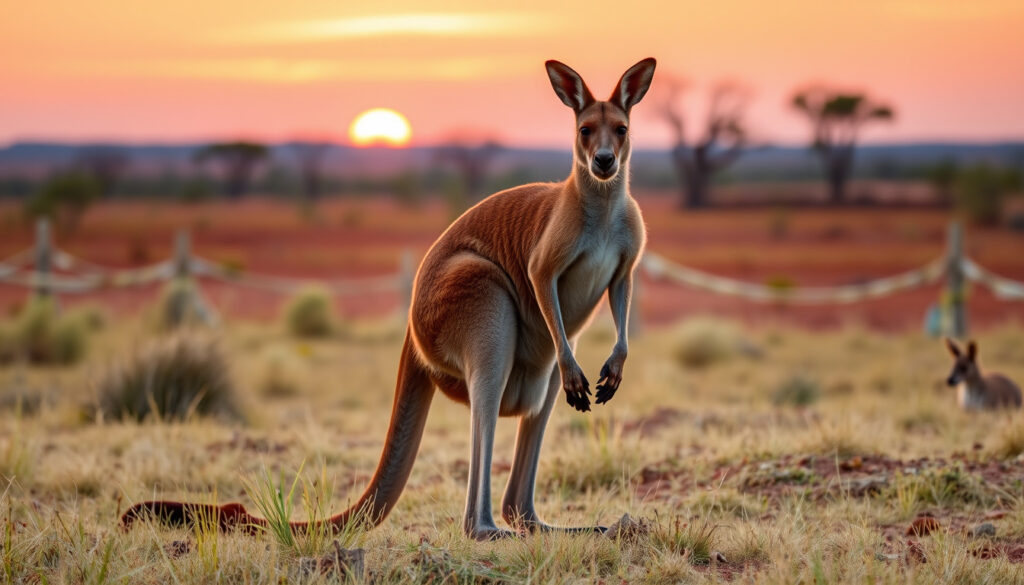
Red Kangaroo: Size, Strength, Habitat, and Behavior
There’s something about the red kangaroo that captures the imagination—it’s not just its size, but how effortlessly it moves through the arid outback. Males can stand two metres tall and weigh up to 90 kilograms, making them true giants of the marsupial world.
Scientific name: Osphranter rufus · Max height: 2 m (6.6 ft) · Max weight: 90 kg (200 lb) · Hopping speed: 35 mph (56 km/h) · Lifespan: 8–12 years in wild · IUCN status: Least Concern
Quick snapshot
- Red kangaroo is the largest marsupial on Earth (National Geographic (global nature publication))
- Males are significantly larger than females (Australian Museum (natural history institution))
- They can achieve speeds over 35 mph (National Geographic (global nature publication))
- Exact population numbers fluctuate with drought and rainfall (Billabong Sanctuary (wildlife sanctuary))
- Hybridization with grey kangaroos in the wild is reportedly rare but not impossible (Wikipedia (community encyclopedia))
- 2008: Red kangaroo assessed as Least Concern by IUCN (Wikipedia (community encyclopedia))
- Ongoing monitoring by state agencies to manage populations and reduce road incidents (Queensland Government (state environment department))
Six key numbers, one takeaway: the red kangaroo is built for size, speed, and endurance.
| Attribute | Value |
|---|---|
| Scientific name | Osphranter rufus |
| Max height | 2 m (6.6 ft) |
| Max weight | 90 kg (200 lb) |
| Hopping speed | 35 mph (56 km/h) |
| Lifespan (wild) | 8–12 years |
| IUCN status | Least Concern |
How powerful is a red kangaroo?
Kick force and self-defense
- Kicks are used primarily against predators and rival males.
- Each foot bears sharp claws capable of inflicting serious wounds.
The red kangaroo’s hind legs are its primary weapon. Billabong Sanctuary (wildlife sanctuary) notes that dingoes are the most significant non-human predators, and a well-placed kick from an adult male can break bones or cause fatal injuries. The claws add penetrating power, making the kick a formidable defense against even large dogs.
A red kangaroo’s kick can deliver enough force to injure a human or kill a dog. That’s why Queensland authorities warn against approaching or feeding these animals.
Hopping speed and agility
- Red kangaroos can reach speeds over 35 mph (56 km/h).
- They can leap up to 9 metres (30 ft) in a single bound.
National Geographic highlights their hopping speed as a means to cover vast distances efficiently. This agility, combined with a powerful tail for balance, allows them to outrun most ground predators. Their bounding gait is energy-efficient at cruising speeds, conserving energy in the harsh outback.
Comparison to other animals
- Males are much larger and stronger than females.
- Red kangaroos outweigh other kangaroo species by a substantial margin.
The Australian Museum (natural history institution) emphasizes sexual dimorphism: males have reddish fur and are roughly double the weight of females (females average around 35 kg). This size difference gives male red kangaroos a strength advantage over female kangaroos of any species and over most grey kangaroo males.
The implication: a red kangaroo’s power is not just in kick force but in the combination of size, speed, and endurance—making it one of the most physically imposing marsupials.
Which kangaroo is bigger, red or grey?
Size differences between red and grey kangaroos
- Red kangaroos are the largest marsupial, generally bigger than grey kangaroos.
- Eastern grey males can sometimes match reds in height but not in weight.
National Geographic clearly states the red kangaroo is the world’s largest marsupial. Wikipedia (community encyclopedia) reports that eastern grey kangaroo males typically weigh up to 69 kg, compared to the red’s 90 kg. Western grey kangaroos are smaller still, reportedly weighing less than 55 kg and having a body length of about 85–100 cm (Verbling (language learning platform)).
Male vs female size within each species
- Male red kangaroos: up to 2 m tall, 90 kg.
- Female red kangaroos: usually blue-grey, smaller.
The Australian Museum notes that females often have blue-grey fur and are significantly smaller. In eastern greys, males can reach 2 m but weigh less than red males. The size gap within each species mirrors the same pattern: males dominate in mass.
What this means: when comparing kangaroo species, weight is the defining metric, not height. A red kangaroo may look similar in stature to a large eastern grey, but its bulk makes it unmistakably heavier.
Are red kangaroos aggressive to humans?
When red kangaroos attack
- Attacks are rare but can occur if the animal feels threatened or cornered.
- Habituated kangaroos that have been fed may approach people expecting food.
According to the Queensland Government (state environment department), kangaroos that have been fed by humans may become aggressive when they expect food and don’t receive it. Males fighting each other can also redirect aggression toward nearby humans. Incidents are more common in areas where kangaroos are regularly fed, such as picnic grounds.
How to avoid conflict
- Keep a safe distance and never feed kangaroos.
- If a kangaroo approaches, move away calmly and avoid direct eye contact.
The same Queensland Government guidelines advise maintaining distance and not feeding any kangaroo. If a kangaroo shows signs of agitation (pawing the ground, standing tall), it’s best to back away slowly. Most interactions are harmless if the animal is left undisturbed.
If you encounter a red kangaroo in the wild, keep a respectful distance and never offer food—your safety depends on maintaining their natural wariness.
The pattern: red kangaroos are generally gentle herbivores, but human habituation creates risk. Respect their space and they’ll keep theirs.
What eats a red kangaroo?
Natural predators
- Dingoes are the primary predator, especially of young kangaroos.
- Wedge-tailed eagles and large pythons may take joeys.
Billabong Sanctuary identifies dingoes as the most significant non-human predator. Foxes and wedge-tailed eagles also prey on young red kangaroos. However, an adult male’s kick and speed make it a challenging target for most predators.
Human impact
- Humans hunt red kangaroos for meat and leather.
- Vehicle collisions are a major cause of mortality.
Hunting is regulated under state permits, and the kangaroo meat and leather industries are legal in Australia. Additionally, road accidents claim many kangaroos each year, particularly near highways that cross their habitat. The Queensland Government provides guidelines for driving in kangaroo-prone areas.
The trade-off: while natural predators like dingoes keep populations in check, human activities—both hunting and vehicle traffic—represent the greatest threat to adult red kangaroos.
Do red kangaroos mate with grey kangaroos?
Can red and grey kangaroos hybridize?
- Hybrids have been reported in captivity but are rare.
- Natural hybridization in the wild is not well documented.
Wikipedia mentions that hybridization with other kangaroo species is rare. Captive settings have produced a few recorded hybrids, but these instances are exceptional and often not viable.
Reproductive barriers
- Genetic differences and behavioral mating patterns usually prevent interbreeding.
- Red kangaroos inhabit arid areas while greys prefer wetter forests, reducing natural contact.
Behavioral differences—such as mating displays and social structures—create additional barriers. The Australian Museum notes that red kangaroos are adapted to arid inland environments, whereas eastern greys occupy coastal and forested regions. This habitat separation minimizes opportunities for interbreeding.
The implication: natural hybridization between red and grey kangaroos is biologically possible but ecologically improbable. The species are distinct enough to maintain separate gene pools.
Three kangaroo species, two distinct size patterns: reds dominate in mass, but greys can match their height.
| Attribute | Red Kangaroo | Eastern Grey Kangaroo | Western Grey Kangaroo |
|---|---|---|---|
| Maximum height | 2 m | Up to 2 m | ~1.3 m |
| Maximum weight | 90 kg | ~69 kg | ~55 kg |
| Body length | 1.4 m (body) + 1 m (tail) | Similar proportions | 85–100 cm |
| Hopping speed | 35 mph | Similar | Similar |
| Habitat | Arid inland | Coastal forests, grasslands | Semi-arid, woodlands |
| Lifespan (wild) | 8–12 years | 8–15 years | 8–15 years |
Nine specs that define the red kangaroo, from classification to reproduction.
| Category | Detail |
|---|---|
| Scientific name | Osphranter rufus |
| Common name | Red Kangaroo |
| Order | Diprotodontia |
| Family | Macropodidae |
| Max height | 2 m (6.6 ft) |
| Max weight | 90 kg (200 lb) |
| Hopping speed | 35 mph (56 km/h) |
| Diet | Herbivorous: grasses, herbs, shrubs |
| Habitat | Arid and semi-arid central Australia |
| Lifespan (wild) | 8–12 years |
| Reproduction | Embryonic diapause; joeys stay in pouch ~8 months |
| IUCN status | Least Concern (2008 assessment) |
What we know and what we don’t
Confirmed facts
- Red kangaroo is the largest marsupial on Earth (National Geographic)
- Males are significantly larger than females (Australian Museum)
- They can achieve speeds over 35 mph (National Geographic)
- Dingoes are primary predators (Billabong Sanctuary)
What’s unclear
- Exact population numbers due to fluctuating rainfall (Billabong Sanctuary)
- Frequency of natural hybridization with grey kangaroos (Wikipedia)
- Detailed cognitive abilities of the species
- Eastern grey kangaroo weight estimates (reported up to 69 kg) vary between sources (Wikipedia)
This mix of well-established facts and ongoing uncertainties highlights the value of continued field research across Australia’s arid zones.
Expert perspectives
The red kangaroo is the world’s largest marsupial, capable of hopping at speeds over 35 miles per hour.
National Geographic (global nature publication)
Their strong legs and clawed feet are enough to keep most predators at a safe distance.
Denver Zoo Conservation Alliance (wildlife conservation organization)
Large males have reddish fur and can reach over two metres in height.
NSW National Parks (New South Wales government parks service via Bush Heritage Australia)
These observations from authoritative sources reinforce the red kangaroo’s unique combination of power, speed, and size that defines the species.
For anyone living in or visiting the Australian outback, the lesson is clear: respect the red kangaroo’s space, avoid feeding it, and you’ll witness one of nature’s most resilient creatures without incident—or face the consequences of a powerful kick.
Their diet of grasses and shrubs overlaps with native plants like lemon myrtle and Correa alba, which are common in their arid and semi-arid habitats.
australianwildlifejourneys.com, animaldiversity.org, youtube.com
For those curious about how the red kangaroo compares to its smaller cousins, the Wallaby vs Kangaroo comparison provides a detailed look at key differences in size and behavior.
Frequently asked questions
How fast can a red kangaroo hop?
Red kangaroos can reach speeds over 35 mph (56 km/h). National Geographic reports this as their maximum speed.
What do red kangaroos eat?
They are herbivores that feed on grasses, herbs, and shrubs. They can go without water for extended periods by obtaining moisture from their food.
Where do red kangaroos live?
They inhabit arid and semi-arid regions of central Australia, including open plains, grasslands, and deserts. National Geographic notes their adaptation to these dry environments.
How long do red kangaroos live?
In the wild, red kangaroos typically live 8–12 years. In captivity, they can reach over 20 years.
How many red kangaroos are left in the wild?
Exact numbers are uncertain due to fluctuating rainfall affecting food availability, but the species is classified as Least Concern by the IUCN.
Do red kangaroos swim?
Yes, kangaroos are capable swimmers and have been observed crossing rivers to escape predators or find food.
How do red kangaroos cool down?
They lick their forearms, where the blood vessels are close to the skin, to cool themselves through evaporation. They also seek shade during the hottest part of the day.
More related posts
 Google Pixel 8 Review: Pros, Cons & Is It Worth It?
 Find My School: How to Look Up Your Roll Number in Ireland
 Cradle Mountain Weather Guide: Snow, Seasons & What to Wear
 Wilson and Frenchy: Where to Buy, Sales & Reviews 2025
 Konstantinos Argiros: Biography, Songs, Net Worth, Age & More
 Billy Crudup Relationship History: Who He Left for Claire Danes
 Lanah Cherry: Multi-Platform Influencer Stats & Earnings
 Bible Verses About Love: 30+ Scriptures for Every Occasion
