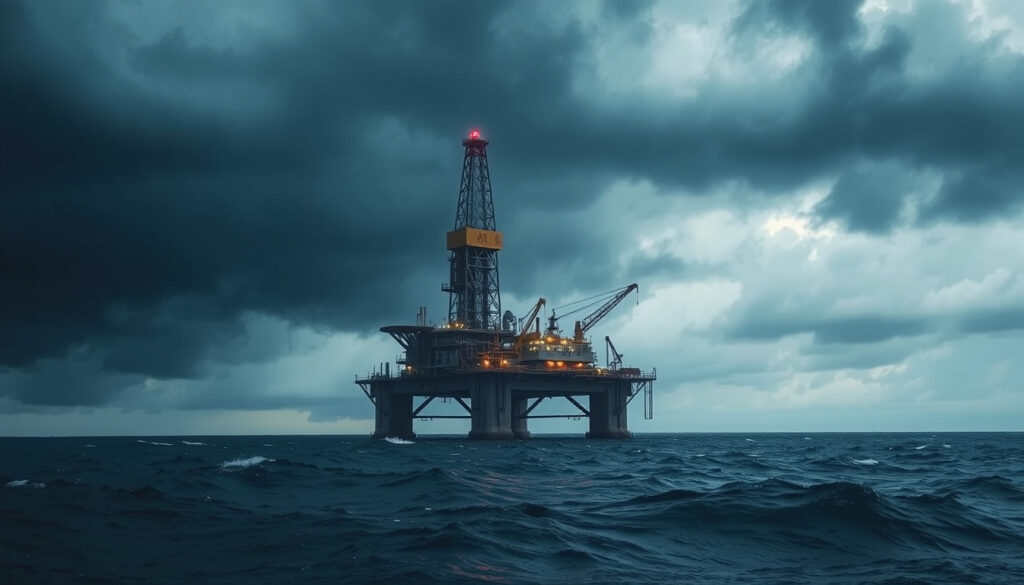
Deepwater Horizon: True Story, Fault, Survivors & 15-Year Update
Fifteen years after the Deepwater Horizon rig exploded in the Gulf of Mexico, the disaster remains the largest marine oil spill in U.S. history, killing 11 crew members and unleashing nearly 5 million barrels of oil. Here’s what actually happened, who was found at fault, and where the survivors and the Gulf coast stand today.
Date of explosion: April 20, 2010 ·
Fatalities: 11 crew members ·
Total oil released: Approximately 4.9 million barrels ·
Total civil penalties paid by BP: $20.8 billion (2015 settlement) ·
Duration of spill: 87 days
Quick snapshot
- Explosion on April 20, 2010, killed 11 workers (NOAA Office of Response and Restoration)
- Total oil released: approximately 4.9 million barrels (NOAA)
- BP pleaded guilty to 14 criminal counts (U.S. Department of Justice)
- Exact payout amounts for individual survivors (many settlements are confidential) (PBS NewsHour)
- Status of restoration projects and remaining funds 15 years on (PBS NewsHour)
- April 20, 2010: Explosion (U.S. Department of the Interior)
- July 15, 2010: Well capped after 87 days (PBS NewsHour)
- July 2015: $20.8 billion settlement (Fortune)
- Multiple lawsuits still stalled in 2025 (PBS NewsHour)
- Restoration projects underfunded and delayed (PBS NewsHour)
Six key specifications of the rig and the Macondo well show the scale of the operation:
| Attribute | Value |
|---|---|
| Rig type | Ultra-deepwater semi-submersible |
| Water depth at site | Approximately 5,000 feet |
| Total well depth | 35,055 feet |
| Owner | Transocean |
| Operator | BP |
| Cementing contractor | Halliburton |
What Is the True Story Behind Deepwater Horizon?
The Explosion and Fire on April 20, 2010
- The rig exploded due to a surge of natural gas that ignited (NOAA Office of Response and Restoration).
- The blowout preventer failed to seal the well.
Witnesses described a sudden roar, then the deck lifting as the gas ignited. Survivor Mike Williams later told investigators the explosion came without warning, throwing men across the rig.
Eleven Fatalities and the Immediate Aftermath
- 11 workers died; 17 were injured.
- All 11 bodies were recovered from the debris field.
The implication: the loss of life was total, but the recovery of every victim gave families a measure of closure that other offshore disasters have not always provided.
Who Was at Fault for Deepwater Horizon?
BP’s Role as Operator
- BP was found grossly negligent by U.S. District Court Judge Carl Barbier in September 2014 (U.S. Department of Justice).
- The company later pleaded guilty to 14 felony counts.
Transocean’s Ownership and Maintenance
- Transocean owned the rig and paid $1.4 billion in penalties.
- Critics say the company’s maintenance practices contributed to the blowout preventer failure.
Halliburton’s Cementing Work
- Halliburton handled the cementing of the well and later settled for $1.1 billion.
- Investigators found that the cement job was flawed and likely allowed gas to enter the well.
The pattern: BP bore the largest share of blame and cost, but every major contractor involved also paid billions.
Were Any Bodies Recovered From Deepwater Horizon?
Search and Recovery Efforts
- All 11 bodies were recovered.
- Remains were found in the debris field around the sunken rig.
Positive Identification of All 11 Victims
- Each victim was positively identified by the Jefferson Parish coroner’s office.
- Names and ages were released; the youngest was just 22 years old.
Why this matters: the recovery of all bodies, while rare in offshore disasters, allowed families to hold funerals and begin the grieving process.
Did Mark Wahlberg Play a Real Person in Deepwater Horizon?
Mike Williams: The Chief Electronics Technician
- Wahlberg played Mike Williams, the chief electronics technician who survived (IMDb).
- Williams was on the rig during the explosion and escaped via a lifeboat.
Other Real Characters in the Film
- Kurt Russell played Jimmy Harrell, the drilling boss who warned of unsafe conditions.
- John Malkovich played Donald Vidrine, a BP supervisor who was indicted but later acquitted.
The trade-off: the 2016 film took dramatic liberties, but the core events — the gas surge, the failed blowout preventer, and the heroism of the crew — are grounded in fact.
How Much Did BP Pay the Survivors and Victims’ Families?
The $20.8 Billion Settlement
- In July 2015, BP agreed to a global civil settlement worth $20.8 billion (U.S. Department of Justice).
- This included $5.5 billion under the Clean Water Act, $8.1 billion for natural resource damages, $4.9 billion to the five Gulf states, and $1 billion to local governments.
Individual Compensation Figures
- A 2012 settlement paid ill workers and coastal residents $67 million.
- Nearly 80% of those seeking compensation received no more than $1,300 each (Fortune).
- About 18,000 people received the minimum payment level.
The catch: while BP’s total payout was historic, the average person who suffered health effects or lost income got almost nothing — a gap that still fuels anger and litigation.
BP paid $20.8 billion, yet 79% of medical-claims recipients got $1,300 or less. The system was designed to compensate the region, but the individual payout structure left thousands of claimants with pocket change. (Fortune)
Timeline of the Deepwater Horizon Disaster
- April 20, 2010: Explosion and fire; 11 workers killed (NOAA).
- April 22, 2010: Rig sinks; oil begins leaking from the wellhead (U.S. Department of the Interior).
- July 15, 2010: Well successfully capped after 87 days.
- September 19, 2010: Well declared “dead” by federal officials (PBS NewsHour).
- September 2014: U.S. District Court finds BP grossly negligent.
- July 2015: BP agrees to $20.8 billion settlement.
- 2025: 15th anniversary; multiple lawsuits still stalled (PBS NewsHour).
The timeline shows that while the well was capped quickly, the legal and environmental fallout continues.
The 2025 stalled lawsuits signal that the legal aftermath may outlast the environmental cleanup. For the Gulf states, the remaining RESTORE Act funds — over $1 billion — are tied up in disputes over how to spend them. (PBS NewsHour)
Clarity Check
Confirmed facts
- BP pleaded guilty to 14 criminal counts (DOJ)
- 11 workers died (U.S. Department of the Interior)
What’s unclear
- Exact payout amounts for individual survivors (many settlements are confidential)
- Status of restoration projects and remaining funds 15 years on (PBS NewsHour)
- Number of pending lawsuits in 2025
- Total oil released amount (disputed by some sources)
Voices From the Disaster
“It was like a bomb went off — the whole rig shook.”
— Mike Williams, chief electronics technician, as told to PBS NewsHour
“I told them we were going to blow a hole in the ocean.”
— Jimmy Harrell, drilling boss, recounting his warnings before the explosion (reported by PBS NewsHour)
“BP’s conduct was grossly negligent.”
— Judge Carl Barbier, U.S. District Court ruling
The consequence: 15 years after the explosion, the legal and environmental accounts are still not closed. For the Gulf coast communities still waiting for restoration, the choice is clear: push for faster disbursement of settlement funds, or watch the coastline degrade further.
offshore-energy.biz, en.wikipedia.org, doi.gov, forbes.com, epw.senate.gov, bbc.com, floridadep.gov
Frequently asked questions
How many people died on Deepwater Horizon?
11 workers died in the explosion on April 20, 2010.
What caused the Deepwater Horizon explosion?
A surge of natural gas from the Macondo well ignited after a failed cement job and a malfunctioning blowout preventer (NOAA).
How much oil leaked from Deepwater Horizon?
Approximately 4.9 million barrels of oil were released over 87 days.
Who owned the Deepwater Horizon rig?
The rig was owned by Transocean and leased to BP.
Is the Deepwater Horizon movie accurate?
The 2016 film dramatizes the events but stays true to the key facts: the gas surge, the failed preventer, and the heroism of the crew.
What happened to BP after the spill?
BP pleaded guilty to 14 felony counts, paid $20.8 billion in civil settlements, and faced billions more in cleanup costs.
How long did it take to clean up the Deepwater Horizon oil spill?
Active cleanup continued for several years, but the well was capped after 87 days. Restoration is still ongoing as of 2025 (PBS NewsHour).
More related posts
 Marcus Ashcroft: Children, Career & Medal Legacy
 Charles Melton: Biography, Age, Height, Relationship, and Movies
 Mr Krabs: Guide to Morality, Species, Age & Voice Actor
 Cheap Third Party Car Insurance – Lowest Rates in India 2025
 James Ransone Dead at 46: Cause, Sobriety, and Family
 Exhaust Shop Near Me – Top Local Services and Repair Tips
 Jean Hailes Clinic – Melbourne Locations Services Appointments
 Jared Padalecki: Bio, Health, Arrest & Net Worth
