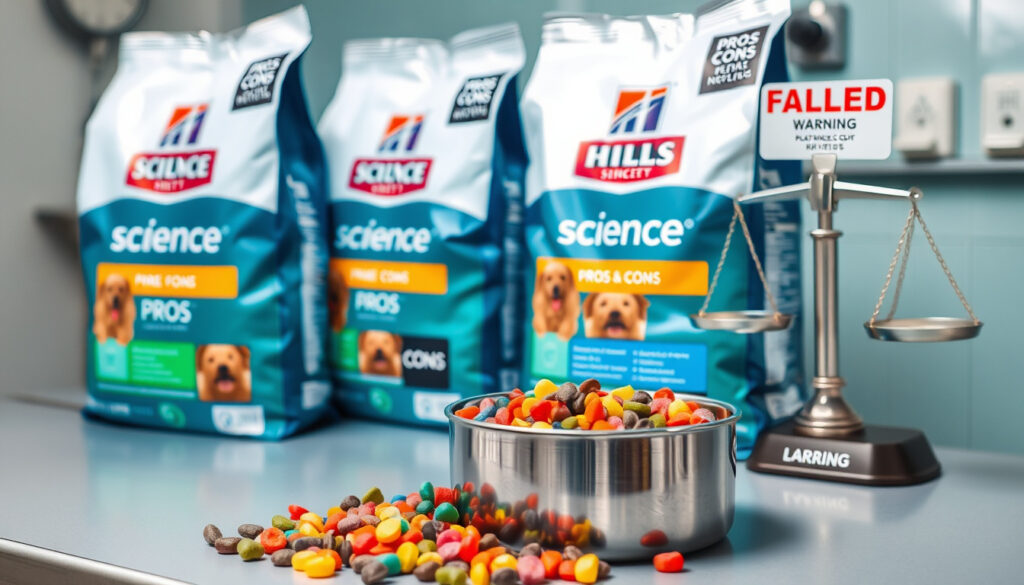
Hill’s Science Diet: Vet Reviews, Pros, Cons & Recalls
If your vet has ever handed you a bag of Hill’s Science Diet after an appointment, you’re not alone — yet the gap between that “vet recommended” badge and the brand’s actual safety record deserves scrutiny. The brand dominates exam rooms across the country, but behind the endorsements lie a 2019 recall affecting 22 million cans, an FDA finding that Hill’s failed its own quality procedures, and ongoing lawsuits questioning whether financial ties shape what gets recommended.
Life Stages Covered: All stages · Formats Available: Dry and wet · Key Benefits Claimed: Digestion, weight, skin, coat · Prescription Line: Available via Direct-Vet
Quick snapshot
- Meets WSAVA guidelines and conducts feeding trials (Just Live Well)
- 2019 recall affected 33 varieties (22 million cans) of canned dog food (Just Live Well)
- FDA found Hill’s failed to follow own quality verification procedures (AVMA)
- Extent of financial incentives between Hill’s and veterinary practices
- Whether “#1 vet recommended” claim holds up to independent scrutiny
- March 2007: Melamine contamination recall (Dogster)
- 2015: Labeling error recall (Just Live Well)
- January 31, 2019: Initial Vitamin D recall (Dogster)
- March 20, 2019: First expansion (Dogster)
- May 2019: Second expansion (Dogster)
- Class action lawsuit proceeding in U.S. District Court
- FDA monitoring for ongoing compliance issues
| Attribute | Details |
|---|---|
| Brand Owner | Hill’s Pet Nutrition |
| Primary Products | Dog and cat food |
| Key Features | Clinically proven antioxidants |
| Formats | Dry, wet |
| Availability | Ireland retailers like Petstop.ie |
Do vets actually recommend Hill’s Science diet?
Yes — many veterinarians do recommend Hill’s Science Diet, though the reasons and the strength of those recommendations vary. According to Owleys (Veterinary advice platform), vets frequently suggest the brand for specific health needs, life stages, and therapeutic conditions such as urinary support, kidney care, and weight management. The brand markets itself as “the #1 veterinarian recommended pet food over any other brand,” a claim Hill’s ties to statistically sound surveys per AAFCO standards.
What makes Hill’s stand out in professional circles is its commitment to meeting WSAVA guidelines and conducting actual feeding trials — not just formulation reviews — which gives veterinarians confidence in consistency and safety. Transcon Pet notes that vets recommend Science Diet, Royal Canin, and Purina because these brands invest heavily in scientific research and adhere to AAFCO standards.
PetMD vet recommendations
PetMD’s annual “Best Dog Foods of 2026, Recommended by Vets” list typically features Hill’s products in several categories, reflecting the brand’s strong presence in veterinary education and continuing education programs. However, these lists often highlight Prescription Diet variants more than the standard Science Diet line.
Prescription diet endorsements
The Prescription Diet line, sold through veterinary channels, carries more clinical backing than the over-the-counter Science Diet products. Vets recommend monitoring results over 4–8 weeks when switching to these therapeutic formulas, which addresses specific medical conditions under veterinary supervision.
Upsides
- Strong scientific research and clinical trials backing
- Meets WSAVA guidelines and AAFCO standards
- Wide range of formulas for different life stages and health needs
- Real meat as the first ingredient in most recipes
- Consistent availability through veterinary practices and retailers
Downsides
- Contains peas and legumes in several formulas
- Higher carbohydrate content compared to some competitors
- Premium pricing for what critics call average ingredients
- Plant-based fillers used in certain recipes
- Heavy marketing presence may overshadow ingredient quality questions
What are the pros and cons of Hill’s?
The picture gets more nuanced when you look beyond the marketing materials. Dogster (Pet care publication) identifies genuine strengths: good for specific health issues, real meat as first ingredient in most recipes, wide range of formulas, and scientific validation. These aren’t trivial benefits — they represent a level of research investment that most pet food brands simply cannot match.
On the flip side, independent reviewers give Hill’s Science Diet a B- grade (6.5/10), noting that the brand’s carbohydrate content and use of plant-based fillers don’t justify the premium price point. The brand contains peas and legumes, and not all grain sources are ideal — these are valid criticisms that pet owners should weigh against the scientific credentials.
Nutrition benefits
- Hill’s includes clinically proven antioxidants in many formulas, supporting immune function
- The company funds ongoing nutritional research through its pet health division
- Feeding trials mean the nutrition label actually reflects what pets digest and absorb
- Formulas are tailored for puppies, adults, and senior dogs across breed sizes
Reported drawbacks
- Carbohydrate levels run higher than some competing premium brands
- Some formulas rely on plant proteins rather than meat-based protein sources
- Critics argue marketing budgets may eclipse actual ingredient quality
- Price premium does not always correlate with nutritional superiority
Hill’s charges premium prices for formulas that independent reviewers rate only B-, while the brand’s most credentialed research applies primarily to its Prescription Diet line, not the Science Diet products most consumers actually buy.
What are the issues with Hill’s science diet?
The most serious issue in Hill’s history is the 2019 recall. According to the FDA, Hill’s Pet Nutrition initiated a voluntary recall on January 31, 2019, after elevated Vitamin D levels were detected in 25 canned dog food products. The recall expanded on March 20, 2019, to 19 additional products, and expanded again in May 2019, ultimately affecting 33 varieties of canned dog food — approximately 22 million cans in total across 86 lots.
The AVMA reported in February 2020 that the FDA found Hill’s failed to follow its own procedures for verifying ingredient quality — a serious laps that the regulatory body said needed corrective action. Symptoms of Vitamin D toxicity include vomiting, loss of appetite, increased thirst, excessive urination, drooling, and weight loss, potentially leading to kidney failure or death.
Recall history
Hill’s has faced multiple recall events over the years. In addition to the 2019 Vitamin D crisis, the company was part of the melamine contamination recall in 2007 that affected multiple pet food brands. A labeling error led to another recall in 2015 involving Science Diet canned foods.
A class action lawsuit filed in U.S. District Court in Kansas City involved 300 plaintiffs following the 2019 recall. Dogster reports that hundreds of pets are believed to have died from the Vitamin D contamination, though the exact number remains unconfirmed. The recall only affected canned dog food — cat food, dry kibble, and treats were not involved.
Common complaints
- Pet owners report frustration over delayed recall notifications
- Some veterinarians expressed concern about Hill’s partnership structures influencing recommendations
- The 2019 recall drew criticism for not catching the Vitamin D issue through internal quality controls
- Critics argue the brand’s marketing may overshadow these safety protocol questions
The FDA’s finding that Hill’s failed its own quality verification procedures is significant: it suggests the brand’s internal controls did not catch a problem that affected 22 million cans before external testing revealed it.
What is better, Royal Canin or Hill’s Science diet?
This is one of the most common questions pet owners ask, and the honest answer depends on your priorities. Transcon Pet (Pet industry analysis) groups all three — Hill’s, Royal Canin, and Purina — together as brands that veterinarians prefer for their scientific backing and clinical trial investment. But each has distinct approaches.
The comparison below shows how these brands stack up across key criteria, from research investment to recall history to price point.
| Criteria | Hill’s Science Diet | Royal Canin | Purina |
|---|---|---|---|
| Research investment | High (feeding trials, WSAVA compliance) | High (formulation studies, breed-specific formulas) | High (Pro Plan research division) |
| Recall history | 2019 major recall (Vitamin D), 2007 melamine, 2015 labeling | Fewer documented recalls | Has faced recalls over years |
| Ingredient profile | B- (6.5/10) grade; higher carbs | Similar premium formulation approach | Wide range from budget to premium |
| Prescription options | Extensive (via vet channels) | Extensive (via vet channels) | Moderate prescription lineup |
| Vet recommendation strength | Strong institutional relationships | Strong institutional relationships | Strong institutional relationships |
| Price point | Premium pricing | Premium pricing | Mid to premium range |
The implication: all three brands share similar institutional advantages and similar risks, so the choice often comes down to formula availability and individual pet response rather than clear quality differences.
Key differences
Royal Canin and Hill’s are more similar than different — both invest heavily in veterinary relationships, both have extensive prescription lines, and both have faced quality questions over the years. The main distinctions lie in breed-specific customization (Royal Canin excels here) and flavor variety (Hill’s offers broader options in the standard Science Diet line).
Vet preferences
Veterinarians don’t universally prefer one over the other. Owleys notes that vets recommend checking whether your pet needs the Prescription Diet or standard Science Diet, and monitoring results over 4–8 weeks. Not every pet thrives on Hill’s; some require alternatives based on tolerances, taste preferences, budget, or calorie density needs.
Choosing between Hill’s and Royal Canin means accepting that both brands carry similar institutional advantages and similar risks — including recall histories and questions about the influence of their veterinary partnership programs on recommendations.
Do vets get kickbacks from Hills?
This is the question many pet owners are too embarrassed to ask their vet directly. The evidence suggests a more complicated picture than a simple yes or no.
Just Live Well reports that some veterinary practices have formal partnerships with Hill’s, which may influence product recommendations — though the publication notes that most veterinarians genuinely believe in the products they recommend. Hill’s provides extensive veterinary resources through hillsvet.com, including continuing education, practice management tools, and nutritional research — services that strengthen the professional relationship beyond simple product sales.
A lawsuit filed in U.S. District Court alleges that Hill’s and veterinarians fabricated grain-free diet dangers to promote their own products, though this remains an unproven legal claim from a tier 3 source that has not yet produced a court victory. Transcon Pet notes that critics argue heavy marketing by vet-recommended brands may overshadow ingredient quality shortcomings.
Prescription diet incentives
Prescription diets are only available through veterinary channels, which creates an inherent business relationship. Vets who sell these products directly often earn margins on the products — this is standard practice across the veterinary industry, not unique to Hill’s. The question isn’t whether this arrangement exists, but whether it shapes clinical recommendations in ways that don’t serve pet health.
Industry practices
The Hill’s model — offering veterinary education, research support, and exclusive product availability through clinics — is standard practice for prescription pet food brands. Critics argue this creates financial incentives that may conflict with purely nutritional recommendations, while proponents note that veterinary oversight of therapeutic diets serves an important medical purpose.
The prescription diet model inherently involves financial relationships between brands and veterinary practices. While no evidence confirms direct kickback schemes, the combination of educational support, exclusive product access, and margin sharing creates structural incentives that pet owners should be aware of when evaluating recommendations.
Hill’s Science Diet specifications
Six key specifications differentiate Hill’s Science Diet products from one another.
| Specification | Details |
|---|---|
| Life stage coverage | Puppy, adult, mature adult, senior (dogs); kitten, adult, mature cat (cats) |
| Formula categories | Weight management, sensitive stomach, skin/food allergy, urinary care, kidney care, joint support |
| Protein sources | Chicken, lamb, salmon, venison (varies by formula) |
| Format options | Dry kibble, canned wet food, pouches |
| Special features | Clinically proven antioxidants, omega fatty acids, fiber blends |
| Prescription Diet separation | Separate therapeutic line available only through veterinary clinics |
Foods like Hill’s® Science Diet® pet food are formulated to meet your pet’s nutritional requirements through different life stages… it is also the #1 veterinarian recommended pet food over any other brand.
Hill’s Pet Nutrition (Brand statement)
The FDA is investigating the presence of elevated, potentially toxic levels of vitamin D in an expanded recall of 85 total lots of 33 varieties of Hill’s canned dog foods.
FDA (Regulatory Alert)
The agency says Hill’s failed to follow company procedures for consistently verifying the quality of ingredients in its pet foods.
AVMA (Veterinary News Reporting)
Related reading: Simparica Trio for Dogs · Urinary Tract Infection Treatments
Pet owners often compare Hill’s Science Diet with Royal Canin cat food vet review when vets discuss tailored cat nutrition alongside recall histories.
Frequently asked questions
Is Hill’s Science Diet grain-free?
Standard Hill’s Science Diet products are not grain-free. The brand uses whole grains like brown rice and oatmeal in most formulas, which may concern pet owners seeking grain-free options for their animals.
What flavors are available for Hill’s Science Diet dog food?
Hill’s Science Diet offers chicken, lamb, and salmon varieties in both dry and wet formats. Specific availability varies by formula and life stage.
How much does Hill’s Science Diet cost in Ireland?
Prices vary by retailer, but Hill’s Science Diet typically commands premium pricing comparable to Royal Canin. Irish retailers like Petstop.ie carry the standard Science Diet line.
Is Hill’s Science Diet suitable for puppies?
Yes, Hill’s offers specific Science Diet formulas for puppies, including small breed puppy formulas. These provide tailored nutrition for growing dogs under one year of age.
Does Hill’s Science Diet contain chicken?
Most Hill’s Science Diet recipes list chicken as the first ingredient. Lamb and salmon varieties are available for pets with chicken sensitivities or preferences for alternative proteins.
What is Hill’s Science Diet perfect weight?
Hill’s Perfect Weight is a specific Science Diet formula designed for adult dogs needing weight management. It contains fewer calories and higher fiber to support satiety while reducing caloric intake.
Can I feed Hill’s Science Diet to senior dogs?
Yes, Hill’s offers mature adult and senior formulas that address common age-related concerns including joint support, reduced calorie density for less active dogs, and antioxidants for immune function.
For pet owners in Ireland navigating the choices, the decision involves weighing genuine scientific backing against documented recall history, understanding that the Prescription Diet line carries more clinical evidence than the standard Science Diet products, and recognizing that veterinary recommendations come with institutional financial relationships that don’t necessarily align with every pet’s individual needs. The informed choice is not “which brand” but “which formula for this specific pet” — and that conversation belongs in the exam room with full transparency about the options.
More related posts
 Ruth Bader Ginsburg: Life, Legacy & Supreme Court Career
 Rupee to AUD: INR to Australian Dollar Exchange Rate
 Met Gala 2025 Theme: Superfine Tailoring Black Style
 Marfan Syndrome Symptoms: Signs, Red Flags & Diagnosis
 Mia Khalifa: Career, Controversy, and Life After Adult Film
 Lindy Chamberlain: Wrongful Conviction and Exoneration
 Coles West Ryde: Hours, Phone, Parking & Directions
 Jared Padalecki: Bio, Health, Arrest & Net Worth
