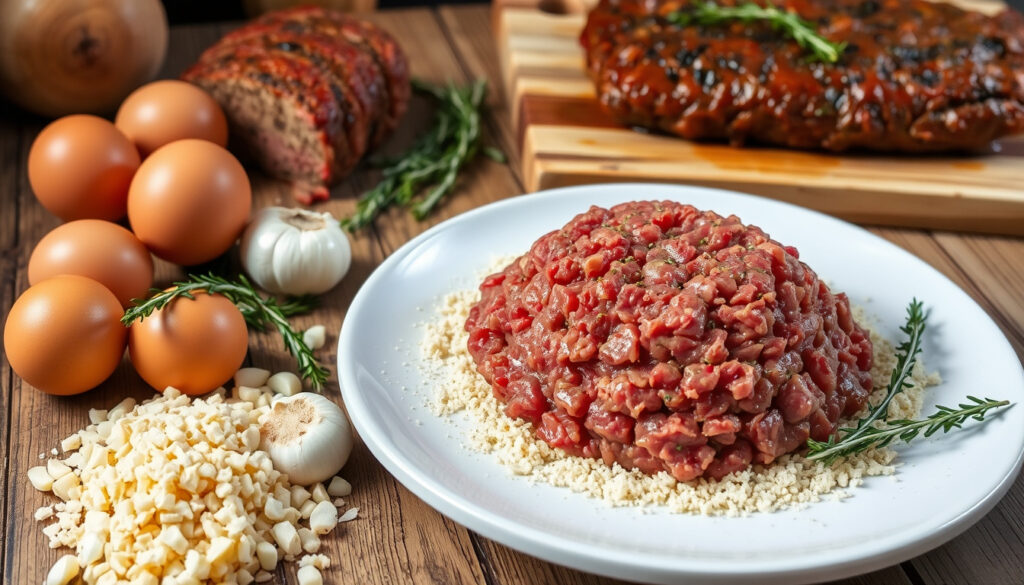
Meat Loaf Ingredients, Secrets, and Best Recipe
Some dinners feel like a warm memory, and meatloaf tends to top that list. For some people, the memory is a ketchup-glazed Sunday plate; for others, it’s a weeknight rescue from the leftovers drawer.
Oven: 180–220°C (350–425°F) · Bake: 45–60 min at 180°C · Target temp: 71°C (160°F) · Meat: 70–80% lean beef mince
Before you preheat, the numbers that connect most classic recipes are simple:
| Origin | Likely German or Belgian meatloaf (Hackbraten, Fricadelle), popularized in the U.S. |
| Typical oven temperature | 180°C–220°C (350°F–425°F) |
| Common meat base | Beef mince, usually 70–80% lean |
| Average baking time | 45–60 minutes at 180°C |
| Standard internal temperature | 71°C (160°F) |
| Key ingredient ratio | About 1 lb meat to ½ cup binder to 1 egg |
| Most common glaze | Ketchup, brown sugar and vinegar |
| Basic ingredient count | 5–12 ingredients, depending on the recipe |
Oven Temperature
180°C–220°C (350°F–425°F) — based on Food Network’s classic meatloaf
Meat Base
Beef mince, 70–80% lean — as recommended by Culinary Hill
Baking Time
45–60 minutes at 180°C — standard from Food Network
Internal Temperature
71°C (160°F) — safe target from USDA food-safety guidance
What are the ingredients for meatloaf?
A great meatloaf starts with the same pattern that ran through many 20th-century American dinner tables: decent beef, a starch, an egg, an aromatic, and a sweet-sour glaze.
Beef with a little fat
- 70–80% lean beef is the most common base. The remaining fat keeps the crumbs and egg from turning the loaf into a dry sponge.
- Beef-and-pork mixtures also work. Pork adds extra richness and tenderness, but it isn’t required for the classic version.
The classic card from Betty Crocker, a General Mills brand known for approachable American meal recipes, is a good example of the style: a simple list that leans on ground beef and a ketchup-style glaze.
The binder: bread, crumbs and egg
- About ½ cup of binder per pound of meat is a useful starting point. That can be breadcrumbs, quick oats, or soft bread.
- One egg per pound is the most common helper. The egg firms the loaf when it bakes, but it doesn’t do the whole job by itself.
- Milk-soaked crumbs are the moisture trick to remember. They soften the crumb and help the loaf feel juicy rather than pasty.
Onion, seasoning and glaze
- Onion is the most consistent aromatic. It appears in almost every classic meatloaf sample, including the Betty Crocker version.
- A tomato-based glaze is the standard finish. Ketchup, brown sugar, and vinegar create the sweet-tangy crust that defines the American classic.
So when someone asks what makes “the best” meatloaf, the answer is usually not exotic: it’s a fatty enough meat base, a moist binder, a sharp aromatic, and a sweet-sour glaze.
What is the secret to a great meat loaf?
Moisture isn’t luck, and it isn’t a single magic ingredient. Most of the work happens before the loaf goes into the oven.
Moisture-retention techniques
- Use milk-soaked bread or panko. Dry crumbs without any added liquid tend to steal moisture from the meat.
- Don’t overmix. Once the egg is added, mix only until there are no dry patches left. Overworking firms up the beef proteins and pushes moisture out.
- Add a little Worcestershire or tomato paste for flavor. These ingredients also contribute a small amount of liquid to the mixture.
This is the technique that Serious Eats, a U.S. cooking site known for food science and practical kitchen tests, has explored in recipes for ground-meat classics: a panade, or a paste of bread and milk, gives the beef enough moisture to stay tender through a long bake.
The role of the pan and loaf shape
- A free-form loaf on a sheet pan gives the meat more exposed surface area, so it browns well and any extra fat can render.
- A loaf pan traps juices and creates a taller, softer slice. It’s also the easiest route if you want a no-fuss, old-fashioned feel.
Resting and slicing
- Rest the loaf for 10 minutes before slicing. That short rest helps the juices redistribute and gives you cleaner pieces.
- Bake to 71°C (160°F) in the center. That is the safe target temperature for ground beef from the USDA, the federal agency that sets food-safety guidance.
The pattern: the combination of fat, moisture from binder, and minimal manipulation gives the best texture.
What not to put in meatloaf?
Knowing what to skip can be just as useful as knowing the formula.
Three moves that usually end in a dry loaf
- Extra-lean beef on its own. If you choose 90/10 mince or a lean turkey blend, you’ll need to add some kind of moisture, such as sautéed onion, grated zucchini, or a little olive oil.
- Dry crumbs without liquid. Breadcrumbs alone will absorb the meat’s juices. If you use them, add a splash of milk, tomato sauce, or even unsalted stock.
- Overworked filling. The more you press and knead the mixture, the more likely you get a dense, tough loaf.
Allrecipes, a large community recipe archive run by home cooks, is a helpful reminder that the best-rated meatloaf recipes usually keep things practical: a fatty enough beef blend, a simple crumb, and a glaze that uses ingredients already in the pantry.
What about gelatin as a “secret” ingredient?
Occasionally you’ll see a modern recipe from Delish, a recipe publisher known for practical home cooking and restaurant-inspired shortcuts that adds a little unflavored gelatin to the meat mixture. That trick can add a silky texture to a lean loaf, but it won’t fix a dry mixture or an overbaked center. Gelatin is a modern hack, not a classic requirement.
The catch: many common mistakes arise from trying to cut fat or speed up mixing.
What is the world’s best meatloaf recipe?
“Best” is subjective, but the recipes that get the most knowing nods usually balance three things: flavor, texture, and ease.
What “best” usually means
- Flavor: beef, onion, a little Worcestershire, and a sweet-tangy ketchup glaze.
- Texture: tender enough to cut with a fork, firm enough to hold a slice.
- Ease: one bowl, one pan, and an instant-read thermometer.
A simple classic formula
From Betty Crocker’s old-school version to many reader-loved recipes from Taste of Home, a magazine and website built around home-kitchen family cooking, the template is almost identical:
- 1 lb beef mince, ideally 80/20
- ½ cup milk or milk-soaked breadcrumbs
- 1 egg
- ¼ cup finely chopped onion
- 1–2 tablespoons Worcestershire sauce
- A simple ketchup-brown-sugar-vinegar glaze
That’s a solid weeknight meatloaf. It doesn’t require a long list of spices or a trip to a specialty store.
What are the ingredients for an old-fashioned meatloaf?
Old-fashioned meatloaf is more about method than ingredients. It follows a one-bowl rhythm:
- Heat the oven to 180°C (350°F) and line a sheet pan or loaf pan with parchment.
- Soak the crumbs in milk for 5 minutes. That softens the traditional binder.
- Add the beef, egg, onion and Worcestershire. Mix gently until the liquid is absorbed, but stop as soon as everything is combined.
- Shape it into a loaf. A free-form loaf gives you more crust; a pan gives you a taller slice.
- Bake until the center hits 71°C (160°F). This usually takes about 45–60 minutes for a 2-lb loaf.
- Glaze, then rest. Add or brush the ketchup glaze during the last 5–10 minutes, then let the loaf rest before slicing.
The old-fashioned version is also the most forgiving: because it relies on classic ratios, you can scale it up for a crowd or shape it smaller for a weeknight dinner.
What’s true about meatloaf?
Confirmed facts
- Onion is a core aromatic in classic meatloaf. Betty Crocker
- The safe center temperature for ground beef is 160°F. USDA
- The usual ratio is about 1 lb meat, ½ cup binder, and 1 egg. Betty Crocker
- Most old-fashioned recipes finish with a ketchup, brown sugar, and vinegar glaze. RecipeTin Eats
Still up for debate
- Loaf pan vs. sheet pan. Both work; they just give slightly different textures.
- Gelatin as a “secret” ingredient. It can work, but it’s far from necessary in a classic loaf.
- Whether oats are as good as breadcrumbs as a binder. Some recipes prefer oats for texture.
- Whether soaking breadcrumbs in milk is significantly better than using dry crumbs with liquid added separately.
The pattern: classic meatloaf relies on well-established ratios and techniques, with modern tweaks offering marginal improvements.
What the sources say
A meatloaf that keeps its shape without becoming dry is the whole game: enough fat, a milk-soaked crumb, and a long enough rest.
— Betty Crocker, classic American meatloaf
Use a food thermometer to check the center; ground beef is safe at 160°F.
— USDA food-safety guidance
Put those two ideas together and you have the simple answer to most meatloaf problems: a moist, well-seasoned mixture, a steady 180°C oven, and a digital thermometer to tell you when to stop baking.
The recipe for a perfect meatloaf comes down to balancing fat, moisture, and flavor—a principle that any home cook can rely on.
Related reading: Slash GNR: Biography, Health, Wealth, and Band Status 2025 · Gene Simmons: Health, Net Worth, Relationships & KISS History
swiggy.com, wabeef.org, 101cookingfortwo.com, themodernproper.com, tastesbetterfromscratch.com, delish.com, natashaskitchen.com, browneyedbaker.com
Frequently asked questions
Why is my meatloaf dry?
The usual causes are extra-lean beef, too much dry crumb, and overcooking. Switch to 80/20 beef, use milk-soaked bread, and pull the loaf at 160°F.
Should I put an egg in meatloaf?
In most classic recipes, yes. One egg per pound gives the loaf structure and helps it hold together without making it rubbery.
Can I make meatloaf without breadcrumbs?
Yes. Quick oats, crushed crackers, and softened bread can replace breadcrumbs in most recipes. Keep the ratio at about ½ cup binder per pound of meat.
Do I need a loaf pan?
No. A free-form loaf on a sheet pan works beautifully and gives you more brown, crusty edges.
Can I make meatloaf ahead of time?
Yes. You can mix the loaf, store it raw in the fridge for a few hours, or bake it and reheat slices later.
How long should meatloaf rest before slicing?
About 10 minutes. It lets the juices settle into the crumb, making the first slice much less likely to crumble.
More related posts
 Thomas Shelby: Real Person? Biography, Age, Death & Romani Roots
 Kate Ceberano: Heritage, Family, Career & Current Projects
 Marfan Syndrome Symptoms: Signs, Red Flags & Diagnosis
 Lemon Myrtle: Uses, Growing Guide & Health Benefits
 Sabrina Carpenter Height – 5’0″ (152 cm), Swift Comparison
 Olivia Gadecki: Bio, Ranking & AO 2026 Mixed Doubles Win
 Fuel Watch WA: Check Today’s and Tomorrow’s Prices
 Jordin Sparks: Biography, Children, Husband & Net Worth
