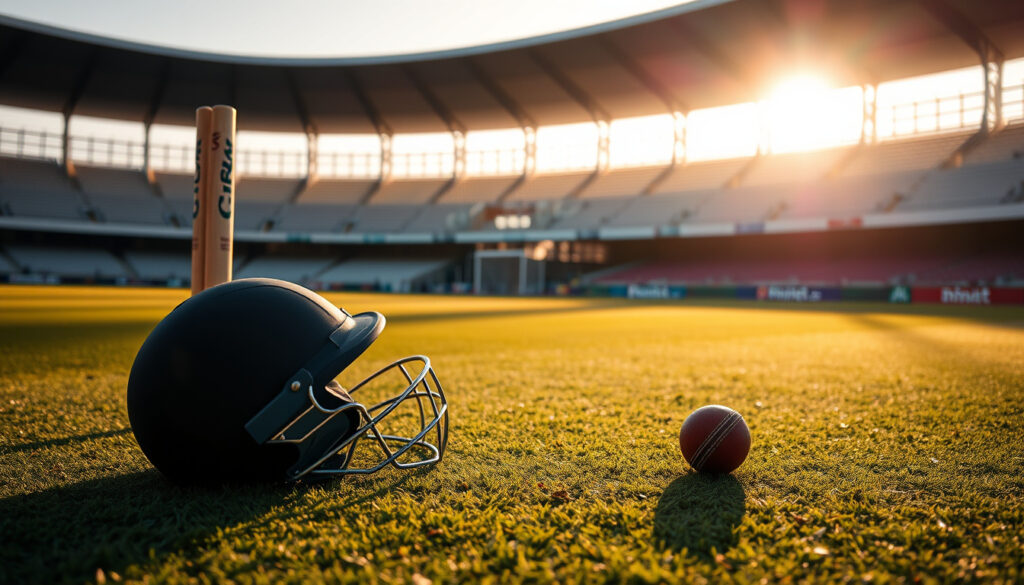
Phillip Hughes Death: Full Story and Cricket Safety Legacy
Cricket fans remember exactly where they were on 25 November 2014, the day a Sheffield Shield match turned into a national tragedy. Phillip Hughes, a 25-year-old Australian batsman on the cusp of a Test recall, was struck on the neck by a bouncer and died two days later.
Date of birth: 30 November 1988 ·
Date of death: 27 November 2014 ·
Age at death: 25 ·
Test matches played: 26 ·
ODI matches played: 25 ·
Highest Test score: 160
Quick snapshot
- Exact last words before losing consciousness remain disputed
- Sean Abbott’s private comments to the Hughes family are not fully public
- 25 November 2014: struck during Sheffield Shield match (BBC Sport)
- 27 November 2014: declared deceased (BBC Sport)
- 2016 inquest: accidental death verdict (NSW Coroners Court)
- Mandatory neck protectors in domestic cricket (NSW Coroners Court)
- Ongoing helmet standard reviews (Cricket.com.au)
Five key facts that define the player and the tragedy:
| Attribute | Value |
|---|---|
| Full Name | Phillip Joel Hughes |
| Role | Top-order batsman |
| Test Debut | 26 February 2009 vs South Africa |
| ODI Debut | 27 February 2013 vs Sri Lanka |
| Domestic Teams | New South Wales, South Australia, Worcestershire, Middlesex |
What was the cause of Phillip Hughes’ death?
Medical explanation of vertebral artery dissection
The fatal injury was a vertebral artery dissection — a tear in the artery wall that runs through the neck vertebrae. According to the NSW Coroners Court (state coroner’s office), the cricket ball struck Hughes just below the left ear, causing the artery to tear. This led to a traumatic basal subarachnoid haemorrhage: bleeding into the space around the brain. The coroner recorded death as accidental, with no evidence of foul play or equipment failure.
A vertebral artery dissection is rare in cricket — the injury is more common in car accidents or chiropractic manipulation. Hughes’s case forced sports medicine to confront a previously unthinkable vulnerability.
Official coroner’s report
The inquest, which concluded on 4 November 2016, heard testimony from medical experts, teammates, and equipment manufacturers. The NSW Coroners Court (state legal authority) confirmed that the post-mortem opinion recorded on 28 November 2014 identified the cause as a traumatic basal subarachnoid haemorrhage due to vertebral artery injury. The coroner found that a minuscule misjudgement or slight error of execution by Hughes caused him to miss the ball.
The implication: even a fraction of a second in timing can turn a routine delivery into a life-threatening event, and no helmet available at the time could have prevented the injury.
Who bowled the ball that hit Phillip Hughes?
Sean Abbott’s background and career
Sean Abbott was a 22-year-old fast bowler playing for New South Wales against South Australia. He had made his first-class debut two years earlier and was a promising all-rounder. According to BBC Sport (leading sports news outlet), Abbott was the bowler who delivered the bouncer that struck Hughes on 25 November 2014 at the Sydney Cricket Ground.
The incident during the Sheffield Shield match
Hughes, batting for South Australia, was on 63 not out when he faced a short-pitched delivery from Abbott. The ball hit him on the side of the neck, just below the helmet. He collapsed immediately and was given CPR on the field before being rushed to St Vincent’s Hospital in Sydney. The match was abandoned. The BBC Sport (sports news authority) reported that the coroner found no malicious intent by Abbott and no failure to enforce the laws of cricket regarding short-pitched deliveries.
Abbott’s delivery was a legal, routine bouncer — the kind bowled thousands of times every season. The tragedy lay not in the action but in the physics of where the ball landed and the rare vulnerability of the human anatomy.
How old would Phil Hughes be today?
Phillip Hughes was born on 30 November 1988 in Macksville, New South Wales. He was 25 years old at the time of his death. If alive today, he would be 36. The BBC Sport (sports news authority) confirms his age at death as 25.
The pattern: Hughes was in the prime of his career, having scored a record-breaking 160 on Test debut in 2009, and was considered a strong candidate for a Test recall after a prolific domestic season.
What was the aftermath of the incident and what did Sean Abbott say?
Sean Abbott’s public statement and return to cricket
Days after the incident, Sean Abbott released a public statement expressing profound grief and shock. According to ESPNcricinfo (specialist cricket news outlet), Abbott said there will always be risks in the game and did not want cricket’s laws changed to eradicate bouncers. He thought the main change should be more protective equipment and training on what to do if someone gets hit. Abbott returned to professional cricket the following week, an act that drew widespread admiration.
Virat Kohli’s attendance at the funeral
Virat Kohli, then India’s Test captain and a close friend of Hughes from their time together at Middlesex, flew to Australia for the funeral. The BBC Sport (sports news authority) reported that Kohli was among the 6,000 mourners who attended the service in Macksville.
Details of the funeral and pallbearers
The state funeral was held on 3 December 2014 in Macksville, Hughes’s hometown. The pallbearers included his teammates David Warner, Aaron Finch, and several others. The event was broadcast live across Australia.
The editorial takeaway: the funeral was not just a farewell — it was a public reckoning with the fragility of athletic life, and the presence of international stars like Kohli underscored cricket’s global grief.
What is Phillip Hughes’ legacy in cricket?
Cricket safety protocols and the introduction of helmet neck guards
The incident triggered a fundamental review of cricket safety. The NSW Coroners Court (state judicial authority) found that since Hughes’s death, rules and equipment changed, including a requirement in Sheffield Shield playing conditions for 2016/17 that batters wear a helmet compliant with the 2013 British Standard when facing fast or medium pace bowling. The Cricket.com.au (official cricket body) reported that a Cricket Australia review recommended helmets be compulsory for batsmen, wicketkeepers, and close-in fielders.
However, a Cricket Australia-commissioned review (sport’s governing body) concluded that the now-mandated British Standard helmet would not have protected Hughes at the point where he was struck. The ABC News Australia (national public broadcaster) reported that the inquest heard the latest protective equipment would not have saved his life.
Mandatory helmets and neck protectors reduce risk but cannot eliminate it. The paradox is that the very equipment designed to protect batters may create a false sense of invulnerability, while the most dangerous area — the gap between helmet and shoulder — remains exposed.
Phillip Hughes’ career highlights and last match
Hughes’s last match was for South Australia against New South Wales on 25 November 2014. He scored 63 not out at the time of the incident. His career highlights include a Test debut score of 160 against South Africa in 2009, making him the youngest Australian to score a century on debut. He also scored 63 not out on his ODI debut against Sri Lanka in 2013. The BBC Sport (sports news authority) confirms his Test and ODI debut details.
“I am trying to find a way to deal with this. I am struggling to come to terms with what has happened.”
— Sean Abbott, public statement, November 2014 (as reported by ESPNcricinfo)
“I don’t have any words. I’m broken. Rest in peace, my brother.”
— Virat Kohli, social media tribute, November 2014 (as reported by BBC Sport)
“The fatal injury was a vertebral artery dissection caused by the cricket ball striking his neck. There was no malicious intent by Sean Abbott.”
— Dr. Michael Kelleher, NSW State Coroner, 2016 inquest verdict (as reported by BBC Sport)
Hughes’s legacy is twofold: a brilliant young talent cut short, and a catalyst for safety reforms that continue to evolve. The NSW Coroners Court (state judicial authority) noted that development of neck protection remained ongoing and that Cricket Australia recommended contracted players wear neck protectors.
For Cricket Australia, the choice is clear: continue investing in better helmet design and neck protection, or accept that the game’s most thrilling moments — the bouncer duel — will carry an irreducible risk.
bbc.com, en.wikipedia.org, coroners.nsw.gov.au, theweek.com, espn.com, cricbuzz.com, cricket.one
Frequently asked questions
What is a vertebral artery dissection?
A vertebral artery dissection is a tear in the inner lining of the vertebral artery, which runs through the neck. It can cause a blood clot to form, leading to a stroke or, as in Hughes’s case, a fatal subarachnoid haemorrhage.
Did Phillip Hughes die instantly?
No. Hughes collapsed on the field and was taken to St Vincent’s Hospital in Sydney, where he underwent emergency surgery. He died two days later, on 27 November 2014.
Was Sean Abbott ever blamed for the accident?
No. The coroner found no malicious intent and no failure to enforce the laws of cricket. Abbott was widely supported by the cricket community and returned to professional play the following week.
What safety changes did cricket make after Hughes’ death?
Helmet standards were updated to require compliance with the 2013 British Standard. Cricket Australia recommended mandatory neck protectors for batsmen, wicketkeepers, and close-in fielders. Sheffield Shield conditions now require helmets for batters facing fast or medium pace.
How old was Phillip Hughes when he died?
He was 25 years old, born on 30 November 1988 and died on 27 November 2014.
Did any other cricketer die from a similar injury?
No other cricketer has died from a bouncer-related neck injury at the professional level, though several have suffered serious injuries. Hughes’s case remains the only fatal in-match incident of its kind in modern professional cricket.
What was Phillip Hughes’ highest test score?
His highest Test score was 160, scored on debut against South Africa in February 2009.
Who were Phillip Hughes’ pallbearers?
The pallbearers included his teammates David Warner and Aaron Finch, among others. The state funeral was held in Macksville, New South Wales, on 3 December 2014.
Related reading: Temba Bavuma: Biography, Captaincy Record & Stats · Eric Hipwood injury return: 200th game after ACL surgery
More related posts
 Cara Delevingne: Biography, Partner, Movies & Net Worth (2025)
 Where is Kazem Hamad Now? Iraq Arrest and Tobacco Wars
 Richie Benaud: Captain, Commentator, and Cricket Legend
 Jordin Sparks: Biography, Children, Husband & Net Worth
 High Interest Savings Account Australia – Best Rates April 2026
 Electric Sports Cars – Best 2024 Models Ranked
 Roy Lichtenstein: Pop Art Master and His Legacy
 Corey Fogelmanis: Gender, Relationship, Pronouns, and More
