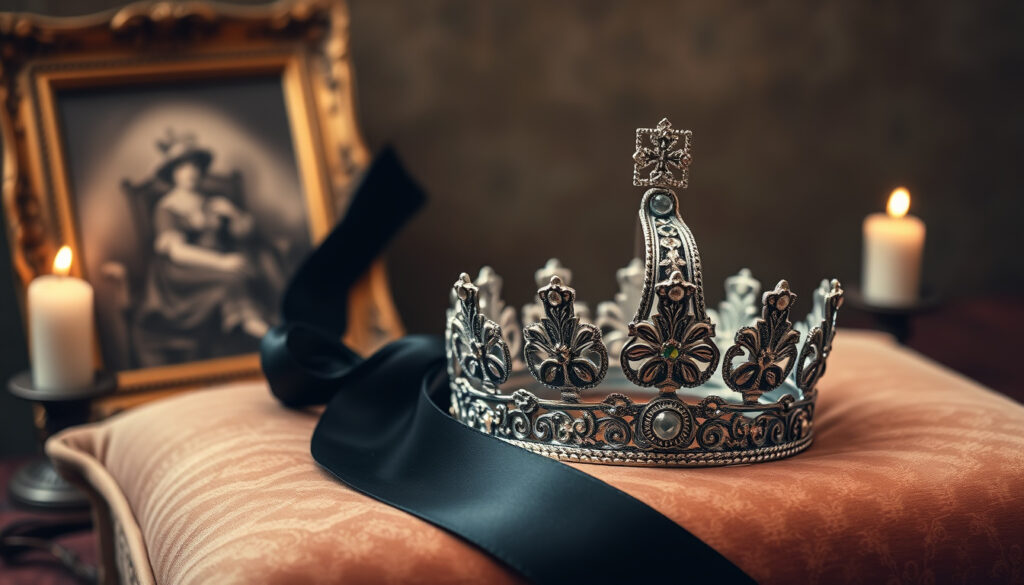
Queen Victoria: Facts, Family, and Death
There aren’t many monarchs whose name defines an entire era, but Queen Victoria is one: she reigned for more than six decades, oversaw industrial and imperial transformation, and left a family tree that still shapes European royalty. This guide separates the documented facts from the persistent myths about her life, relationships, health, and final days.
Reign: 20 June 1837 – 22 January 1901 ·
Birth: 24 May 1819, Kensington Palace, London ·
Death: 22 January 1901, Osborne House, Isle of Wight ·
Children: 9 ·
Height: 4 ft 11 in (150 cm) ·
Spouse: Prince Albert of Saxe-Coburg and Gotha
Quick snapshot
- Victoria married Prince Albert on 10 February 1840 (Britannica)
- She had nine children between 1840 and 1857 (BBC Teach)
- Her reign lasted 63 years and 216 days (Wikipedia)
- She died on 22 January 1901 at Osborne House (The Royal Family)
- Whether Victoria had a romantic relationship with servant John Brown
- The exact nature of her relationship with Abdul Karim, her Indian attendant
- The origin of the “black child” rumor — likely a myth with no credible evidence
- Whether Victoria’s last words were exactly “I am very tired” or “Bertie” – multiple versions exist
- 1840–1857: Nine pregnancies over 17 years — a major physical demand (BBC Teach)
- 14 December 1861: Prince Albert’s death from typhoid, which triggered Victoria’s lifelong mourning (The Royal Family)
- 1901: Death reported with last words attributed to tiredness or calling for her son (Britannica)
- Continued scholarly interest in debunking Victoria-era myths (Britannica)
- Ongoing research into hemophilia’s origins in her lineage (BBC Teach)
- Historical re-evaluation of her relationships with male servants (The Royal Family)
Here is a quick reference table of Queen Victoria’s key details.
| Full Name | Alexandrina Victoria |
| Born | 24 May 1819, Kensington Palace |
| Died | 22 January 1901, Osborne House |
| Reign | 20 June 1837 – 22 January 1901 |
| Spouse | Prince Albert (m. 1840; died 1861) |
| Children | 9 (5 daughters, 4 sons) |
| Height | 4 ft 11 in (150 cm) |
| Cause of Death | Cerebral hemorrhage |
What are 5 facts about Queen Victoria?
Early life and accession
- Princess Alexandrina Victoria was born on 24 May 1819 at Kensington Palace, the only child of Edward, Duke of Kent, the fourth son of George III (The Royal Family).
- She became queen on 20 June 1837 at age 18, following the death of her uncle William IV without legitimate heirs (The Royal Family).
- Educated at home by Baroness Lehzen, she studied languages, arithmetic, music, and drawing — and became a lifelong diarist (The Royal Family).
Marriage and family
- Victoria married her first cousin Prince Albert of Saxe-Coburg and Gotha on 10 February 1840. In her journal that evening she wrote: “I never, never spent such an evening!!” (Britannica).
- She had nine children — five daughters and four sons — born between 1840 and 1857 (BBC Teach).
- Through strategic marriages, her descendants spread across European thrones, earning her the nickname “grandmother of Europe” (GBH).
Reign and legacy
- Her reign of 63 years and 216 days made her the longest-reigning British monarch — until Queen Elizabeth II surpassed that record in 2015 (Wikipedia).
- She was proclaimed Empress of India in 1876, cementing British imperial rule over the subcontinent (Wikipedia).
- The Victorian era — named after her — saw the Industrial Revolution, expansion of the British Empire, and sweeping social and cultural changes (Britannica).
Death and succession
- Victoria died on 22 January 1901 at Osborne House on the Isle of Wight (The Royal Family).
- The cause of death was a cerebral hemorrhage (Britannica).
- Her son Bertie succeeded her as King Edward VII (The Royal Family).
Victoria’s reign spanned a period when Britain’s global influence peaked. For historians and Royal watchers, separating verified events from embellished stories clarifies how one monarch’s personal decisions — from marriage alliances to medical secrecy — shaped modern Europe’s royal landscape.
The implication: her public record is solid, but the private myths continue to attract scrutiny.
Is Queen Victoria related to Queen Elizabeth?
Family tree connection
- Queen Victoria was the great-grandmother of Queen Elizabeth II. Elizabeth II’s father, George VI, was the son of George V, who was Victoria’s grandson (The Royal Family).
- Victoria’s son Edward VII was Elizabeth II’s great-grandfather.
Shared lineage through George III
- Both monarchs are descended from King George III. Victoria was George III’s granddaughter through her father, Edward, Duke of Kent. Elizabeth II is George III’s great-great-granddaughter through the same line (Britannica).
- This means Victoria and Elizabeth II share a direct bloodline back to the House of Hanover — Victoria being the last Hanoverian monarch, while Elizabeth II belonged to the House of Windsor (renamed from Saxe-Coburg and Gotha during World War I).
What this means: every British monarch from Victoria onward — Edward VII, George V, Edward VIII, George VI, and Elizabeth II — is her direct descendant. Elizabeth II was Victoria’s great-granddaughter, not a distant cousin.
Victoria’s large family created a dense European royal network — but it also spread hemophilia into several dynasties. Her descendants who inherited the gene faced shortened lives and medical secrecy that even today limits full genetic understanding of the condition.
The pattern: the genetic legacy of her lineage is both a blessing and a burden for modern royal houses.
How many pregnancies did Queen Victoria have?
Pregnancy history
- Victoria gave birth nine times between 1840 and 1857 — roughly one pregnancy every two years for 17 years (BBC Teach).
- Her first child, Victoria (known as Vicky), was born on 21 November 1840, nine months after her wedding. Her last child, Beatrice, was born on 14 April 1857.
- Five daughters and four sons survived to adulthood — a remarkable survival rate for the era.
Children and their names
Below is a list of Victoria’s children with their birth and death years.
| Name | Born | Died |
|---|---|---|
| Victoria, Princess Royal | 1840 | 1901 |
| Edward VII | 1841 | 1910 |
| Alice | 1843 | 1878 |
| Alfred | 1844 | 1900 |
| Helena | 1846 | 1923 |
| Louise | 1848 | 1939 |
| Arthur | 1850 | 1942 |
| Leopold | 1853 | 1884 |
| Beatrice | 1857 | 1944 |
Impact on health
- Victoria reportedly disliked pregnancy and childbirth. She called it the “shadow side” of marriage in private letters (BBC Teach).
- Her son Leopold was born with hemophilia, a blood-clotting disorder. Victoria was the first known royal carrier of the disease (GBH).
- Leopold’s hemophilia killed him at age 30 after a fall caused a cerebral hemorrhage (GBH).
The pattern: Victoria’s reproductive life was physically demanding — nine full-term pregnancies in 17 years — and left a medical legacy she kept secret. Hemophilia appeared suddenly in her male descendants, affecting royal houses across Europe.
What were Victoria’s last words?
Final moments
- Victoria died at Osborne House, Isle of Wight, on the evening of 22 January 1901. Her son Edward (the future Edward VII) and several grandchildren were present (The Royal Family).
- Her physician, Dr. Reid, was at her bedside. He later wrote an account of her final hours.
Reported last words
- Two versions of her last words are widely cited: “I am very tired” and “Bertie” (her pet name for her son Edward VII) (Britannica).
- According to Dr. Reid’s account, she had suffered a series of strokes in the days leading up to her death. Her final utterance was reportedly a quiet murmur.
Context of her death
- The official cause of death was cerebral hemorrhage (a stroke) (Britannica).
- She was 81 years old. Her health had declined during 1900, with rheumatism, cataracts, and dementia-like symptoms noted by her household.
The implication: the uncertainty over her last words reflects the difficulty of capturing a precise deathbed moment, but both versions align with her known condition.
Who did Queen Victoria love the most?
Love for Prince Albert
- Victoria’s letters and journals make clear that Prince Albert was the love of her life. In an 1840 journal entry she wrote: “I never, never spent such an evening!!” about their wedding night (Britannica).
- After Albert died of typhoid fever on 14 December 1861, Victoria entered a period of deep mourning that lasted the remaining 40 years of her life (The Royal Family).
- Biographer A.N. Wilson wrote in “Victoria: A Life” that she “never recovered from Albert’s death.”
Relationship with John Brown
- After Albert’s death, Victoria grew close to her Highland servant John Brown. He was a gruff, loyal companion who accompanied her everywhere and referred to her as “wumman” (woman) in private (BBC Teach).
- Rumors that Brown and Victoria had a romantic or even secret marriage circulated widely — but no credible evidence supports them. The Queen herself called the allegations “scandalous” (Britannica).
- Victoria’s children and courtiers disliked Brown’s intimacy with the Queen, which fueled gossip rather than truth.
Affection for children
- Victoria’s relationship with her children was often strained. She found babies dull and did not enjoy motherhood the way she enjoyed being a wife (BBC Teach).
- Her eldest daughter Vicky was her favorite among the children, sharing Victoria’s intellectual interests and political acumen.
The trade-off: Victoria loved Albert with such intensity that his death left her emotionally paralyzed for decades. Her relationship with John Brown offered companionship but at the cost of public scandal. For all her nine children, she was a distant mother — the demands of monarchy and her own grief constantly intervened.
“I never, never spent such an evening!!”
— Queen Victoria, journal entry on her wedding day, 10 February 1840
“I am very tired.”
— Reported last words of Queen Victoria, according to her physician Dr. Reid, 22 January 1901
“She is the most unselfish and kind-hearted person I have ever known.”
— Prince Albert, on Queen Victoria’s character, from his letters
“She never recovered from Albert’s death.”
— Biographer A.N. Wilson, “Victoria: A Life”
Timeline: Key events in Queen Victoria’s life
- — Birth of Princess Alexandrina Victoria at Kensington Palace (The Royal Family)
- — Accession to the throne upon death of William IV (The Royal Family)
- — Coronation at Westminster Abbey (The Royal Family)
- — Marriage to Prince Albert (Britannica)
- — Birth of nine children (BBC Teach)
- — Death of Prince Albert from typhoid fever (The Royal Family)
- — Proclaimed Empress of India (Wikipedia)
- — Death at Osborne House (The Royal Family)
Confirmed facts
- Victoria married Prince Albert in 1840 (Britannica)
- She had 9 children (BBC Teach)
- She reigned for 63 years (Wikipedia)
- Her last words were reported as “I am very tired” or “Bertie” (Britannica)
- She was the great-grandmother of Queen Elizabeth II (The Royal Family)
What’s unclear
- Whether she had a romantic relationship with John Brown
- The exact nature of her relationship with Abdul Karim
- The identity behind the “black child” rumor — likely a myth or misinterpretation
- Whether she genuinely disliked all her children equally, or was simply a product of her era’s parenting norms
- Whether her last words were exactly “I am very tired” or “Bertie” – multiple versions exist
For readers investigating Queen Victoria’s life, the documented record is remarkably complete — birth, reign, family, death, and legacy all sit on solid ground. The areas of genuine uncertainty relate to emotional relationships and a single unsubstantiated rumor. The historical archive is unusually rich, but human intimacy leaves fewer traces than state papers do. For readers, this means that while Victoria’s public life is well-documented, her private emotions remain partly obscured.
How old was Queen Victoria when she became queen?
She was 18 years old when she ascended the throne on 20 June 1837 (The Royal Family).
What was Queen Victoria’s real name?
She was christened Alexandrina Victoria. She chose to reign as Victoria, dropping Alexandrina early in her reign (The Royal Family).
Did Queen Victoria speak any languages?
Yes — she was educated in English, French, German, and Italian. She often spoke German with Prince Albert (The Royal Family).
How long did Queen Victoria reign?
63 years and 216 days — from 20 June 1837 to 22 January 1901 (Wikipedia).
What was the Victorian era named after?
It was named after Queen Victoria herself, who reigned during the period of industrial, cultural, political, and military change from 1837 to 1901 (Britannica).
Who succeeded Queen Victoria?
Her son Bertie succeeded her as King Edward VII (The Royal Family).
Where is Queen Victoria buried?
She was buried at the Royal Mausoleum at Frogmore, Windsor, beside Prince Albert (The Royal Family).
Did Queen Victoria have any hobbies?
Yes — she kept a regular journal throughout her life (over 40,000 pages survive), and she enjoyed drawing, painting, and listening to music (The Royal Family).
Related reading
en.wikipedia.org, discoverbritain.com, express.co.uk, youtube.com, facebook.com, instagram.com, study.com
For a deeper look into the circumstances surrounding her passing, see Queen Victorias cause of death.
More related posts
 Wilson and Frenchy: Where to Buy, Sales & Reviews 2025
 Andre Braugher Cause of Death: Lung Cancer, Tributes, and Legacy
 How to Boil an Egg: Perfect Timing for Soft, Medium & Hard
 Ebon Moss-Bachrach: Bio, Ethnicity, The Bear & Fantastic Four
 Cooleman Court Medical Centre – Doctors, Services and Hours
 Dirty Jokes: 175+ NSFW Jokes, Dark Humor & Meaning
 Penrith Golf Club: Menu, Green Fees, Booking & More
 Gary Oldman Movies and TV Shows: Full Career Guide
